Process Street Review (2026): Features, Pricing & Verdict
Many compliance teams spend hours each week chasing signatures, formatting policies, and rebuilding the same checklists after every audit cycle. The time spent on these repetitive tasks quickly adds up, leaving less bandwidth for actual risk management. Process Street introduced three specialized products this year that approach these issues differently from most workflow tools. For the next step, read our overview of How to Write a Press Release Journalists Will Use: A Practical Checklist.
By the end of this review you will see exactly how Docs, Ops, and Cora handle document control, process automation, and AI-assisted compliance checks. You will also know which plan fits teams of different sizes and what the updated pricing tiers actually include.
What Is Process Street?
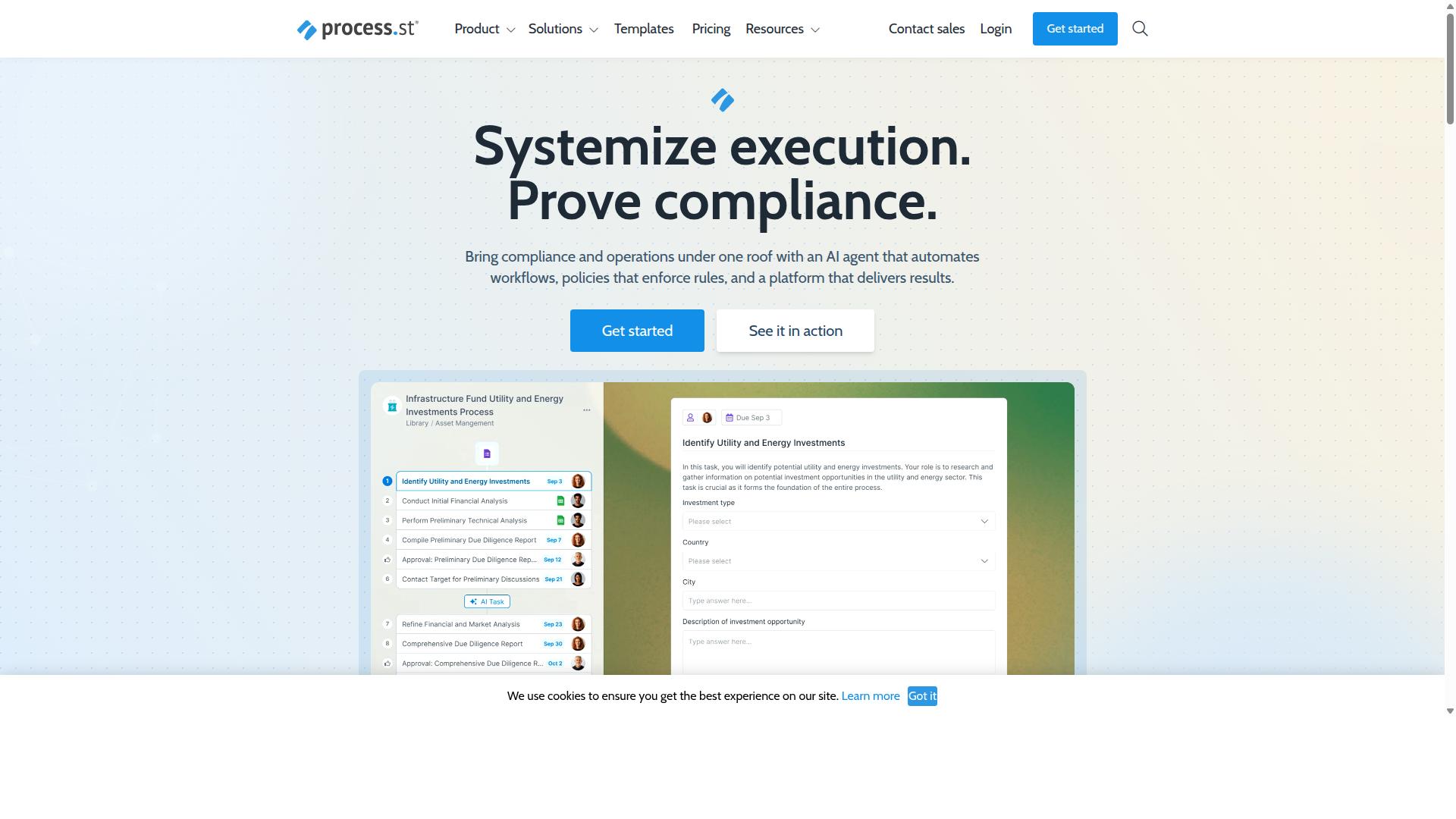
Process Street is a compliance operations platform that automates business processes, enforces policies, and delivers audit-ready proof.
The platform serves organizations that need to standardize operations across multiple teams and locations. It helps companies maintain consistency while proving that policies are followed.
Process Street offers three main products. Docs handles document management and policy control. Ops manages workflow automation and process orchestration. Cora acts as an AI compliance and risk agent.
These products work together to meet compliance and automation needs in one system.
Docs stores policies and procedures in a central location. Teams can access current versions and track who viewed each document. This structure supports audit requirements by keeping records organized.
Ops automates the execution of those policies through checklists and workflows. The system creates audit trails that show exactly when tasks were completed and by whom.
Cora adds intelligence to the compliance process. It identifies potential risks and suggests improvements based on patterns in your operations.
This combination serves industries where compliance is essential. Financial services, healthcare, and manufacturing organizations use the platform to maintain standards while reducing manual oversight work.
Is Process Street Legitimate and Worth Using in 2026?
Process Street serves 3,000+ companies and 1m+ users with SOC 2 Type II and ISO 27001 certifications. These credentials demonstrate that the platform meets rigorous standards for data security and operational integrity.
The platform maintains compliance across multiple regulatory frameworks. These include HIPAA with BAA available upon request, GDPR, CCPA, and AWS CIS requirements. Data never trains AI models, which protects customer information from secondary use.
Process Street reports a 5 minute average response time and a 98% customer rating. These metrics reflect consistent service delivery across different account sizes and use cases.
Organizations that adopt the platform report measurable time savings. IMCD UK achieved a 75% reduction in setup time while 49k+ employees across various companies standardized their onboarding processes. The platform also shows 30% faster documentation in documented implementations.
Users can purchase Process Street through AWS Marketplace. This availability provides procurement flexibility for organizations that prefer centralized billing and vendor management through their existing cloud infrastructure.
The combination of established compliance certifications, documented performance metrics, and verified user adoption indicates that Process Street operates as a legitimate business process management solution. The platform shows consistent operational standards suitable for 2026 deployment across enterprise environments.
Key Features and What Makes Process Street Stand Out
Process Street combines document control, workflow automation, and AI-powered compliance into one platform. This unified approach helps organizations manage complex processes without switching between multiple tools. The platform serves businesses that need both structure and flexibility in their operations.
Three distinct modules work together to address different needs within the same organization. Each module handles specific tasks while sharing data across the system. This integration reduces the gaps that often appear when teams use separate solutions for documents, workflows, and compliance.
Docs: Document Management and Policy Control
Docs delivers full governance for ISO 9001, SOC 2, SOX, and FDA requirements with version control and audit trails. Organizations can maintain complete document histories while enforcing approval processes at each stage. This approach keeps policies current and accessible to the right people.
Document lifecycle controls track changes from creation through retirement. Policy enforcement happens through structured approval workflows that require sign-off before changes take effect. Teams maintain consistency across locations while meeting regulatory standards.
Supported compliance standards include major frameworks used across industries. Audit trails capture every modification with timestamps and user identification. Version control prevents conflicts when multiple people edit the same document.
Ops: Workflow Automation and Process Orchestration
Ops turns policies into AI-powered workflows that orchestrate tasks across teams with conditional logic and integrations. Documented procedures become active processes that guide team members through each required step. This connection ensures that policies translate directly into daily operations.
Key integrations include Zapier, Microsoft Power Automate, Tray.io, Make, and Public API access. These connections allow workflows to trigger actions in other business systems. Data flows between platforms without manual copying or data entry.
Automation capabilities handle repetitive tasks while conditional logic manages different scenarios. Teams receive clear instructions for each process step. The system adapts workflows based on responses and conditions defined during setup.
Cora: AI Compliance Agent
Cora is the AI compliance agent that monitors processes and ensures continuous regulatory adherence. This agent checks workflows against current requirements and identifies potential issues before they become problems. Organizations maintain compliance without constant manual oversight.
Real-time compliance checking happens as work progresses through each process. Risk identification flags items that need attention or review. Automated audit preparation gathers the documentation needed for assessments and inspections.
The agent operates continuously to catch deviations from established procedures. This ongoing monitoring supports teams in maintaining standards across all active processes. Compliance becomes part of the workflow rather than a separate activity.
Pricing and Plans
Three pricing tiers serve different organization sizes and feature requirements. Each tier addresses specific team scales and operational demands. The structure allows organizations to select the level that matches their current needs without overpaying for unnecessary capacity.
Process Street offers clear boundaries between tiers. The Startup plan provides core workflow functionality at an accessible price point. The Pro plan adds enterprise-level capabilities including API access and advanced security features.
The Enterprise tier addresses large-scale operational requirements through custom solutions. Organizations can evaluate their needs against these defined limits to make informed decisions about which tier suits their workflow automation goals.
Startup Plan
The Startup plan offers a simplified Pro experience for early-stage companies. This tier targets growing businesses that need essential workflow tools without complex enterprise features. The plan maintains core functionality while controlling costs.
The Startup plan caps usage at 5 users and 10 guests. Data Set records remain limited to 5,000 entries per workspace. Automation capacity includes 10 apps and 100 actions monthly.
Public API access allows 50 calls each month. API access and SSO are not available at this level. Organizations can test the platform through a 14-day free trial on the Pro plan without providing payment details.
Pro Plan
The Pro plan unlocks API access, SSO/SAML, advanced permissions, and unlimited automation capacity. This tier removes the restrictions found in the Startup plan while adding security and integration capabilities.
Pro plan users receive unlimited users and guests. Automation apps and actions operate without monthly limits. Data Set records extend to 10,000 entries per workspace.
API access becomes unlimited through the Pro tier. SSO/SAML authentication supports enterprise security requirements. Annual billing provides a discount on the monthly rate. The plan serves teams that need scalable workflow automation with advanced access controls.
Trust Signals
Process Street reports 30% faster documentation and 75%+ reduction in setup time based on customer data. These performance metrics show how the platform supports teams in accelerating their business process management initiatives.
IMCD UK reported the 75%+ reduction in setup time after implementing the platform. The company standardized onboarding processes for 49k+ employees across their organization.
Process Street is trusted by 3,000+ companies and 1m+ users worldwide. This broad adoption reflects the platform's reliability across different industries and company sizes.
The platform holds multiple certifications that support enterprise requirements. Process Street is SOC 2 Type II certified, ISO 27001 certified, and HIPAA compliant with a BAA available upon request.
Data never used to train AI models. This approach protects customer information while maintaining transparency about data handling practices.
Support metrics include a 5 minutes average response time and 98% customer rating. These numbers indicate consistent service quality for users who need assistance.
Compliance extends beyond security certifications. The platform meets GDPR requirements, CCPA standards, and AWS CIS compliance protocols.
Process Street is available on AWS Marketplace. This listing provides additional verification for organizations that prefer procurement through established cloud marketplaces.
Who Should Use Process Street
Teams in Operations, Customer Management, Compliance, HR, Finance, and IT & Security benefit most from Process Street. These groups handle recurring processes where structure, accountability, and clear documentation drive results.
Operations teams use Process Street to maintain standard operating procedures that keep production lines running smoothly. A manufacturing facility might create a quality tracking checklist that operators complete at each shift change.
Customer management departments rely on Process Street for client onboarding workflows. Real estate firms standardize property handovers with templates that ensure every new tenant receives the same documentation and instructions.
Compliance teams implement ISO compliance processes through Process Street. Healthcare organizations track regulatory requirements with approval workflows that document each step in the audit trail.
HR departments streamline employee onboarding using Process Street templates. Professional services firms assign tasks across departments, set due dates, and track completion rates for each new hire.
Finance teams manage document control processes with Process Street. Capital markets companies maintain approval workflows for expense reports that require multiple reviewer sign-offs before payment.
IT & Security groups create custom workflows for access management and system changes. Technology companies document each security protocol change through Process Street checklists that maintain compliance records.
Final Verdict
Process Street offers contact sales support with a 5-minute average response time and 98% customer rating. This level of responsiveness helps organizations move forward with implementation questions without delays.
Decision criteria center on your need for workflow automation, checklist software, and business process management capabilities. Teams evaluating task management and SOP creation tools should consider how Process Street fits their current setup.
The platform supports approval workflows, conditional logic, and integrations with Zapier, Microsoft Power Automate, Tray.io, Make, and Public API access. These connections help organizations maintain existing tools while adding structured processes.
Features such as user permissions, audit trails, and compliance support for ISO and SOC 2 standards address common requirements in regulated environments. Organizations prioritizing data security, encryption, and SSO SAML capabilities can evaluate these directly through available resources.
Access to templates, a process library, mobile app, desktop app, and API access provides flexibility across different organizational needs. Pricing tiers include a free plan and paid plans, allowing teams to match their budget with required features.
Support is available via email and chat, with the option to reach contact sales for implementation details. Organizations can also explore Process Street on AWS Marketplace for additional purchasing and deployment options.
Recommended Resources: