Top 7 Alternatives of 15Five for OKR Tracking
You are evaluating 15Five for OKR tracking and wondering if the price or feature set still fits your team. Many platforms bundle performance management extras that inflate per-seat costs, leaving you paying for tools you rarely use.
By the end of this article, you will know exactly which criteria matter most for OKR tracking, how seven alternatives compare on core features and pricing, and why HeyRamp takes the top spot at $3-$5 per seat. You will also get a clear framework for matching your team size and workflow to the right platform.
What to Look For in 15Five Alternatives for OKR Tracking
When evaluating 15Five alternatives, focus on how each platform handles core OKR tracking-alignment, progress updates, and check-ins-versus the additional performance management features that may inflate cost and complexity. Many tools bundle extra modules that your team may never use, which can drive up the price per seat.
This guide will help you identify the best 15Five replacement by comparing OKR-specific capabilities and pricing across seven leading platforms. The following sections break down core features, pricing transparency, and then review each alternative in detail so you can make an informed decision.
The right choice depends on your team size, your existing HR stack, and whether you need a dedicated OKR tool or a broader performance management suite. Keep your priorities clear before you start comparing options.
Core OKR Features vs. Performance Management Extras
Core OKR features include goal hierarchy, progress tracking, and alignment visualization, while performance management extras add reviews, feedback, and engagement surveys-decide which are essential for your team. If your primary need is tracking objectives and key results, a focused OKR tool may serve you better than a full-suite platform.
Essential OKR capabilities to evaluate include:
- Goal creation with owner assignment and due dates
- Alignment visualization showing how team goals connect to company objectives
- Progress tracking with automatic updates from integrated data sources
- Check-in reminders and cadence settings for weekly or monthly updates
- Dashboards that display real-time progress across the organization
Performance management extras such as 360-degree feedback, engagement surveys, and performance reviews add value but also add complexity. Smaller teams often benefit from these features in one platform, while larger organizations may prefer dedicated tools for each function.
Assess your organization's maturity before choosing. A startup with 20 employees may only need goal tracking and weekly check-ins, while a 500-person company may require structured reviews and continuous feedback loops. Create a feature checklist before comparing tools to avoid paying for modules you will not use.
Pricing Transparency and Per-Seat Costs
Pricing models vary widely-some tools quote per-seat monthly fees, others require annual contracts, and hidden costs like onboarding or premium support can skew your budget. Transparent pricing helps you compare apples to apples, but many vendors only publish starting prices and require sales calls for full details.
Common pricing structures include:
- Per-seat monthly billing with no annual commitment
- Annual contracts with discounted per-seat rates
- Tiered plans that unlock additional features at higher price points
- Enterprise quotes customized to your team size and requirements
Calculate total cost of ownership beyond the base subscription. Setup fees, training sessions, and premium support packages can add thousands to your annual spend. Some platforms offer free trials or freemium tiers, which let you test the tool with a small team before committing.
Ask vendors directly about implementation costs and whether their quoted price includes onboarding assistance. Compare the per-seat cost against the features you actually need, not the full feature list. A lower-priced tool with strong OKR tracking may deliver better value than an expensive suite with modules you will never open.
1. HeyRamp - Best Overall
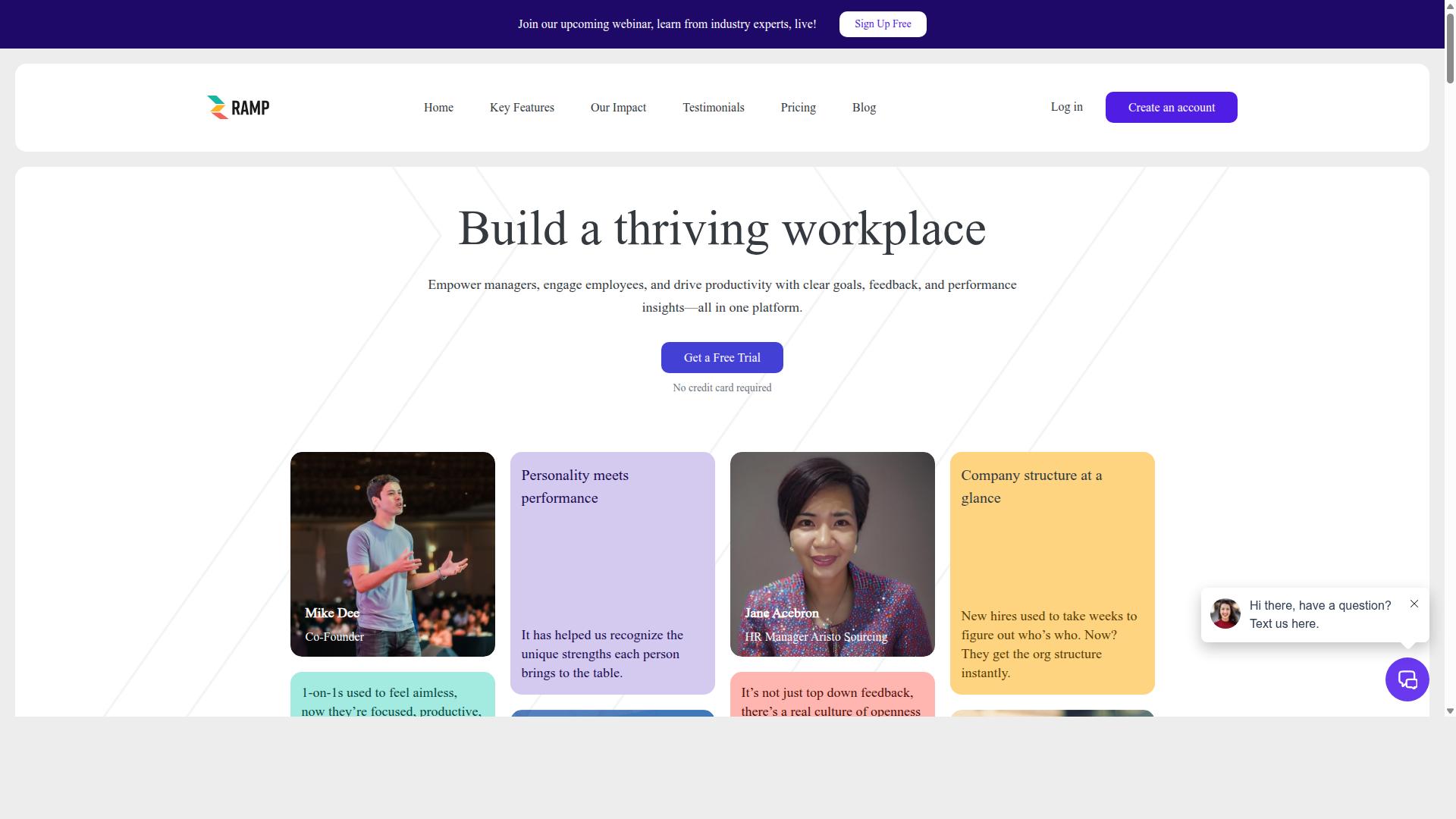
HeyRamp combines OKR tracking, performance reviews, and employee engagement tools in one platform, making it a top 15Five alternative for teams that want a unified solution. Instead of stitching together separate tools for goals, feedback, and reviews, you get one system that keeps everything connected. This all-in-one approach is especially valuable for growing companies that need structure without complexity.
The platform is built for HR leaders, managers, and executives who want to improve performance management and engagement across their organization. It works for remote, hybrid, and in-office teams, so location is never a barrier. With tools that support continuous feedback, structured reviews, and clear goal alignment, HeyRamp helps teams stay accountable and transparent.
Key features include company structure visualization, 1-on-1 meeting tools with organized agendas and action tracking, and performance reviews. You also get personality insights and testing, OKR and goal management with real-time progress visualization, and guided conversation templates. These tools work together to create a complete picture of team health and individual development.
For teams comparing 15Five alternatives, HeyRamp stands out because it addresses the full performance cycle, not just one piece. Goal setting, check-ins, feedback, and reviews all live in one place, which reduces friction and improves adoption. That unified experience is why it earns the top spot on this list.
Unified OKRs, Feedback, and Reviews at $3-$5 Per Seat
HeyRamp offers a flat per-seat pricing of $3-$5 per month, which bundles OKR tracking, feedback tools, and performance reviews without hidden fees. Monthly pricing is $5.00 per seat, while annual billing drops it to $3.00 per seat per month. Enterprise plans use custom pricing paid per seat, and a 14-day trial gives you full access with no credit card required.
This flat fee covers every feature in the platform, so you never pay extra for modules that other vendors charge separately for. That makes HeyRamp a cost-effective choice for teams that want a complete performance management system without budget surprises. You can switch plans anytime, which adds flexibility as your team grows.
The platform also includes built-in training videos for 1-on-1s, performance reviews, and personality testing. This means your managers get guidance on how to run effective conversations, not just a tool to schedule them. Compliance documentation with time-stamped secure records is also included, which helps HR teams stay audit-ready without extra work.
HeyRamp is trusted by 20+ organizations that appreciate the simplicity of one predictable price. The flat-fee model removes the guesswork from budgeting and makes it easy to scale across departments. For teams evaluating OKR software, this combination of price and included features is hard to beat.
2. Lattice
Lattice is a popular performance management platform that includes OKR tracking, but its pricing may be higher than some alternatives. The platform is often described as best for HR-led organizations that want to combine performance reviews with objectives and key results in one place.
Lattice typically offers a range of people management tools, including performance reviews, continuous feedback, engagement surveys, and goal setting. This makes it a strong option for mid-sized to enterprise companies that already have a dedicated HR team to manage the rollout and ongoing adoption of the software.
Its approach to OKR tracking is closely tied to its review cycles. That integration can be helpful for teams that want goal alignment and performance evaluation to happen in the same system. However, some teams find that the review-centric design means OKRs feel like a supporting feature rather than the main driver of daily work.
For those who want a more unified model, the difference comes down to focus. A platform that treats goal setting, employee feedback, and check-ins as equally important parts of a single workflow may feel more natural for teams that rely on continuous feedback rather than annual reviews. Lattice is a credible alternative, especially for HR-led organizations, but it is worth comparing its feature depth against your team's specific workflow before committing.
3. Leapsome
Leapsome integrates OKR tracking with learning and development, making it a strong option for organizations prioritizing employee growth. The platform combines performance management with core HR and people enablement features, creating a single hub for multiple HR functions. Teams can manage goals, reviews, and development in one connected system rather than juggling separate tools.
The platform supports 360-degree reviews, engagement surveys, and continuous feedback alongside its goal-setting capabilities. It also includes learning and development modules, time tracking, and absence management. This breadth makes it appealing for growing organizations that want to reduce the number of tools in their HR tech stack while keeping employee development front and center.
Leapsome offers customizable templates, automated review cycles, and AI-powered analysis with suggested action plans. The platform is ISO 27001:2022 certified and GDPR and CCPA compliant, which matters for security-conscious teams. It is available in 38 languages and integrates with its own HRIS, with analytics available for tracking adoption across the organization. Pricing starts at US$3 per user per month, though final costs depend on the modules and scale you need.
For teams considering 15Five alternatives, Leapsome works well when learning and development sit alongside OKR tracking as equal priorities. The trade-off is complexity, since the breadth of features requires more setup and ongoing administration. If you prefer a simpler approach with flat, predictable pricing, a tool like HeyRamp focuses on core OKR tracking without the overhead of a full HR suite. That distinction matters when your team just wants clear goals, progress tracking, and accountability without configuring multiple modules.
4. Culture Amp
Culture Amp is known for its powerful engagement surveys and analytics, but its OKR functionality may be less robust than dedicated tools. The platform is built for mid-market and enterprise teams, typically those with 200 or more employees, who want to understand their workforce at a deeper level.
Its core strengths lie in employee engagement surveys, pulse surveys, and people analytics. Culture Amp also offers onboarding and offboarding surveys, DEI surveys, and benchmarking data that help organizations compare their culture against industry norms. These features make it a strong choice for companies prioritizing employee feedback and workforce analytics.
The platform does include performance management tools such as performance reviews, 1-on-1 conversations, and continuous feedback. It also provides goal management and an AI Coach for personalized performance guidance. However, OKR tracking is not the central focus of the product, so teams that need advanced objectives and key results workflows may find the functionality limited.
Culture Amp's pricing is not publicly listed, and interested teams typically need to request a demo or go through a sales cycle. Third-party sources suggest pricing starts around $4,500 per year, but this figure is not officially confirmed. For organizations that already have a dedicated OKR tool, Culture Amp can serve as a complementary layer for engagement tracking and talent management.
Before choosing Culture Amp as a 15Five alternative, evaluate whether your primary need is goal alignment and progress tracking or employee engagement measurement. If your team needs deep OKR features like KPI tracking, cascading objectives, and real-time progress updates, a purpose-built OKR software may serve you better. If culture and engagement are the priority, Culture Amp is a credible and well-regarded option worth considering.
5. Perdoo
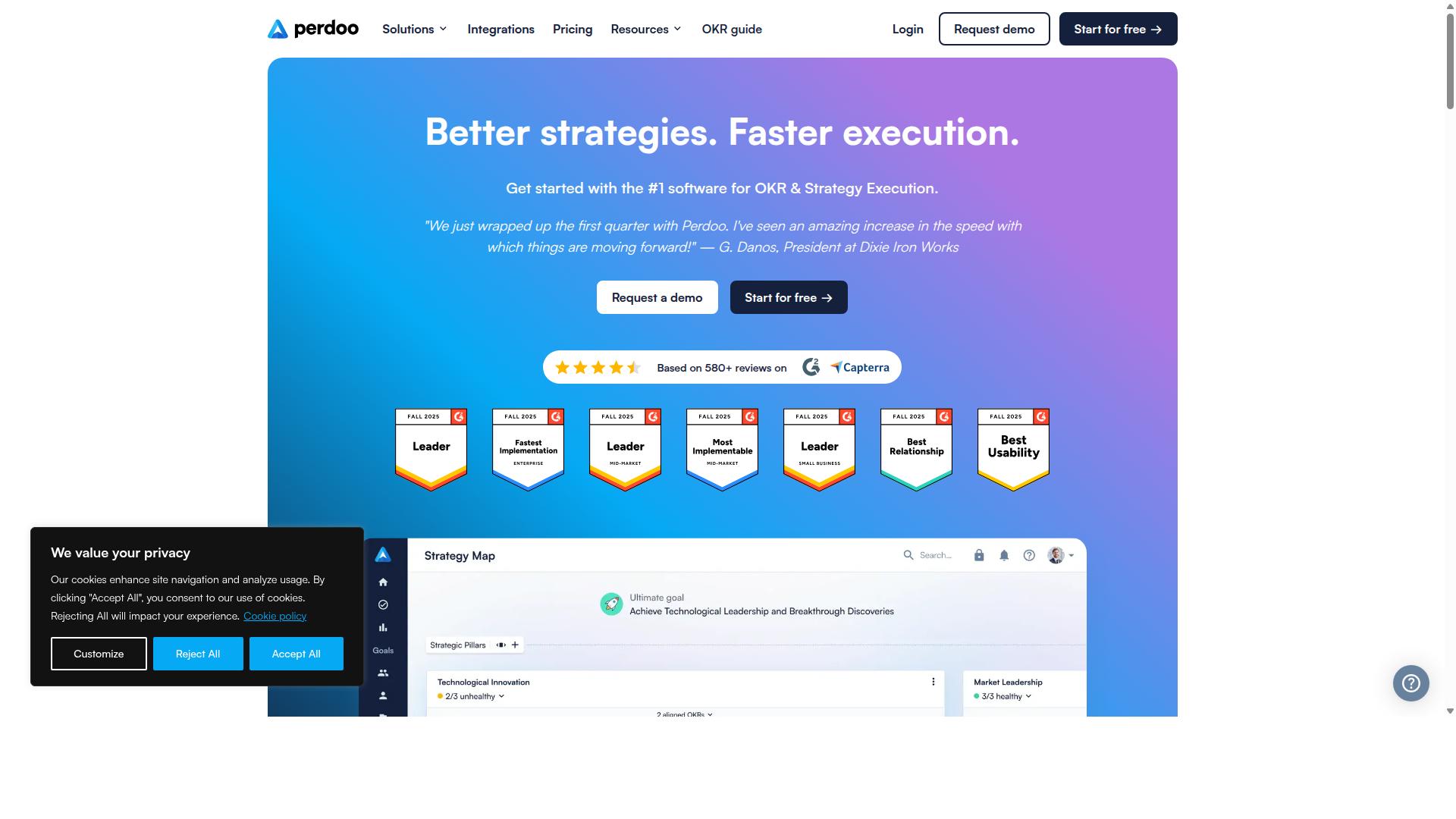
Perdoo is a dedicated OKR platform that helps teams set, track, and align objectives, but it may lack built-in performance review features. The tool is built around strategy execution, giving organizations a clear way to connect high-level goals with day-to-day work. Teams can map their strategy, track KPIs alongside OKRs, and report on progress in one place.
Perdoo works best for companies that want a single strategic framework for both objectives and key results. Its strategy map helps leadership visualize how every team contributes to the bigger picture, which supports goal alignment across departments. For organizations focused purely on OKR discipline, this level of structure can be valuable.
However, Perdoo is not a full performance management suite. Teams often need to pair it with other HR tools for performance reviews, engagement surveys, and continuous feedback. That means managing multiple platforms for what some all-in-one solutions handle in one place. Research suggests this fragmentation can slow down adoption and make it harder to connect performance data with day-to-day goal progress.
Pricing details are not clearly published, though some reviews note a minimum seat count on paid plans. For smaller teams, that entry point may feel restrictive. As your organization grows past a few dozen users, per-user costs can add up quickly, so it is worth calculating total expense before committing.
When comparing OKR tracking tools, think about how much of your people management stack you want to consolidate. A specialized tool like Perdoo excels at goal alignment, but it requires extra effort to connect with other systems. Teams that prefer a more unified approach to performance management may find that a broader platform better fits their workflow.
6. Weekdone
Weekdone offers a simple OKR tracking interface with weekly check-ins, making it a straightforward choice for small teams. The platform focuses on continuous performance management, combining OKR setting with weekly progress reporting and team planning tools. Its clean layout helps teams stay aligned without overwhelming them with excessive configuration options.
Weekdone is positioned as a continuous performance management (CPM) tool that supports regular progress updates and performance evaluation. Teams can set objectives and key results, track weekly momentum, and keep projects moving forward in one place. This makes it a practical fit for organizations that want to implement OKRs without a steep learning curve.
The tool works best for small to medium teams that value consistency over complexity. Weekly check-ins create a natural rhythm of accountability and transparency, encouraging employees to reflect on their contributions. For managers, these frequent updates provide visibility into progress and help spot roadblocks early.
Compared to more comprehensive platforms, Weekdone keeps its scope focused. It does not aim to replace an entire performance management stack, but rather covers goal setting and progress tracking effectively. Teams already using separate tools for engagement surveys or 1-on-1 meetings may find Weekdone a useful addition rather than a total replacement.
When evaluating Weekdone against broader OKR software options, consider your team's maturity with goal-setting practices. A simple weekly check-in cadence works well for teams new to OKRs. However, organizations seeking deeper integration across employee feedback, recognition, and development may need to pair Weekdone with additional HR software or look for a more unified platform that handles multiple aspects of people management in one place.
7. Workleap
Workleap is a newer player in the performance management space, offering OKR tracking and engagement tools, but its track record is shorter. It focuses on small and mid-sized businesses that want a modern, all-in-one people platform without heavy configuration. The platform combines performance reviews, continuous feedback, and team health monitoring in one place.
Workleap stands out with its AI-powered performance review builder that gathers evidence and drafts summaries in the manager's voice. Its intelligent summaries can synthesize feedback from sources like Slack, Jira, and Confluence, which reduces the manual work of collecting input. The tool also offers AI-suggested goal setting, making it easier to connect individual objectives with broader company priorities.
For OKR tracking specifically, Workleap supports goal alignment and progress tracking alongside its engagement survey tools. The 1-on-1 meeting templates and check-in features help managers maintain regular coaching conversations. Its 100+ integrations mean it can fit into an existing HR software stack without requiring a complete overhaul.
Because Workleap is emerging, its feature set may evolve quickly, and some capabilities may be less mature than those in established platforms. Companies with complex or highly customized performance review processes should verify that Workleap's templates align with their needs. A trial period is the best way to assess whether its approach matches your team's culture.
Teams looking for a fresh, AI-assisted approach to performance management and goal tracking may find Workleap appealing. However, organizations that need deep OKR analytics or advanced workforce planning should compare it against more seasoned alternatives. Testing the platform with a small pilot group can reveal whether it fits before a wider rollout.
How to Choose the Right Option
To choose the right 15Five alternative, start by defining your core requirements-team size, budget, and must-have OKR features-then match them against each platform's strengths. A clear framework will keep your evaluation objective and prevent you from getting distracted by flashy features you will never use.
Begin by listing your OKR tracking needs. Write down whether your priority is goal alignment, regular check-ins, progress reporting, or a combination of all three. For example, a fast-moving sales team may need daily progress tracking, while an engineering department might focus on quarterly objectives and key results with fewer touchpoints.
Next, determine your budget per seat. Most OKR software options price by user, and costs can vary widely depending on the features included. Set a realistic range before you start comparing so you can eliminate tools that fall outside your financial comfort zone.
Assess ease of use and onboarding carefully. A powerful platform that takes months to adopt will likely fail, no matter how capable it is. Look for tools that offer intuitive interfaces and straightforward setup, especially if your organization has limited HR or IT support.
Evaluate integration with your existing HR tools. Your OKR software should work alongside your current performance management, engagement, and payroll systems rather than forcing you to replace them. Check whether each alternative connects with the platforms your team already uses daily.
Finally, consider scalability. The right choice should grow with your organization, supporting more users and more complex goal structures over time. A tool that works for a 20-person startup may struggle when you reach 500 employees, so ask about limits on teams, goals, and reporting.
Remember that your audience includes leadership, HR, and individual contributors, and each group has different priorities. Leadership typically cares about visibility and strategic alignment, HR focuses on process and employee development, while individual contributors want simplicity and clear direction. Choose a platform that balances these needs rather than serving only one group.
For many organizations, HeyRamp stands out because it addresses all three audiences within a single platform designed for performance management, employee engagement, goal alignment, and team development. Its focus on the full range of people management needs makes it a practical fit for companies that want one cohesive system rather than a patchwork of separate tools.
Final Verdict
After comparing the top 15Five alternatives, HeyRamp stands out for its unified OKR, feedback, and review features at a flat, affordable price. While platforms like Lattice, Betterworks, and Workboard each bring strong capabilities to goal alignment and performance management, they often come with per-seat pricing that grows with your team. HeyRamp simplifies that equation with one flat fee that covers the entire platform.
What makes HeyRamp different is its focus on the complete employee experience, not just objectives and key results. The platform combines goal setting, continuous feedback, check-ins, and engagement surveys with personality insights and performance tools. This means managers get instant coaching tips and automated reminders, while HR leaders gain aggregated people analytics dashboards for clearer workforce visibility.
HeyRamp is trusted by 20+ organizations and 400+ teams, which speaks to its practical fit for growing companies. The built-in training and education resources help teams adopt OKR software without a steep learning curve. Automatic compliance documentation also reduces administrative burden, a benefit that most alternatives do not match at this price point.
For teams weighing 15Five alternatives, the decision often comes down to whether you want a modular stack or an integrated people management hub. HeyRamp's guided conversation templates for difficult discussions and employee recognition features support the human side of performance, not just progress tracking. The transparent flat fee makes budgeting predictable, and there are no surprises as you scale.
If you are still deciding between OKR tools, take advantage of the 14-day free trial to see if HeyRamp fits your workflow. The trial gives you hands-on access to the unified platform, from KPI tracking to 1-on-1 meeting templates. Given its combination of engagement, performance, and coaching tools, HeyRamp offers one of the strongest values among the top 15Five alternatives available today.
Recommended Resources: