7 WhatsApp Bulk Message Sender Tools for Ecommerce Brands
You need to send bulk WhatsApp messages to customers, but the wrong tool can burn your budget on undelivered blasts or get your number flagged. With Meta's API rules tightening, ecommerce brands can't afford trial-and-error. This guide breaks down seven options, including the one official Meta partner that stands out.
By the end, you'll know exactly which WhatsApp bulk sender fits your store's size, budget, and automation needs. We'll cover what to inspect in every platform, compare the top seven tools head-to-head, and give you a clear number one pick plus the criteria to defend that choice later.
What to Look For in WhatsApp Bulk Message Senders for Ecommerce
Choosing the right WhatsApp bulk message sender for your ecommerce store boils down to five non-negotiable features: API reliability, automation depth, compliance safeguards, personalization, and analytics. Each one directly affects your customer engagement and your bottom line. A tool that fails on any of these will cost you time, money, or customer trust.
Start with API reliability. You need a tool that maintains high uptime and respects WhatsApp's API rate limits. If your order updates or delivery notifications fail during peak shopping hours, your support inbox floods with questions and your conversion rate drops.
Next, evaluate automation capabilities. The best tools support chat automation, drip campaigns, and triggered messages. Look for the ability to send an abandoned cart recovery message one hour after a customer leaves your store, then a follow-up with a discount code the next day.
Compliance is non-negotiable in WhatsApp marketing. The tool must enforce opt-in consent and provide clear opt-out mechanisms. It should also support GDPR requirements, including data deletion requests and audit logs for consent records.
Personalization separates spam from genuine customer engagement. Your tool should pull custom fields from your CRM to insert names, order numbers, and product recommendations. Rich media support matters too, so you can send product catalogs, payment links, and tracking links directly in the chat.
Finally, check the analytics dashboard. You need conversion tracking to see which promotional campaigns drive sales, not just which ones get opened. A/B testing features help you refine message templates and send times without guessing.
Beyond these five features, CRM integration is essential. Your bulk messaging tool should sync seamlessly with your existing customer database. This lets you segment audiences based on purchase history, browsing behavior, and engagement levels.
Multi-agent inbox support matters just as much. When customers reply to your broadcast list messages, real humans need to respond. A shared inbox that lets your support team handle conversations across desktop, mobile app, and WhatsApp Web keeps your customer support consistent.
Think about your team's capacity. The best tools offer a balance of features without overwhelming small businesses. You do not need enterprise-grade complexity if you run a boutique store with a three-person team. Look for a sender that grows with you, not one that buries you in configuration menus.
Test each candidate with a small segment before committing. Send order updates to ten customers, run an abandoned cart recovery flow, and measure your conversion rate. The right tool will feel intuitive from day one, not like a second job.
1. Com.bot - Best Overall
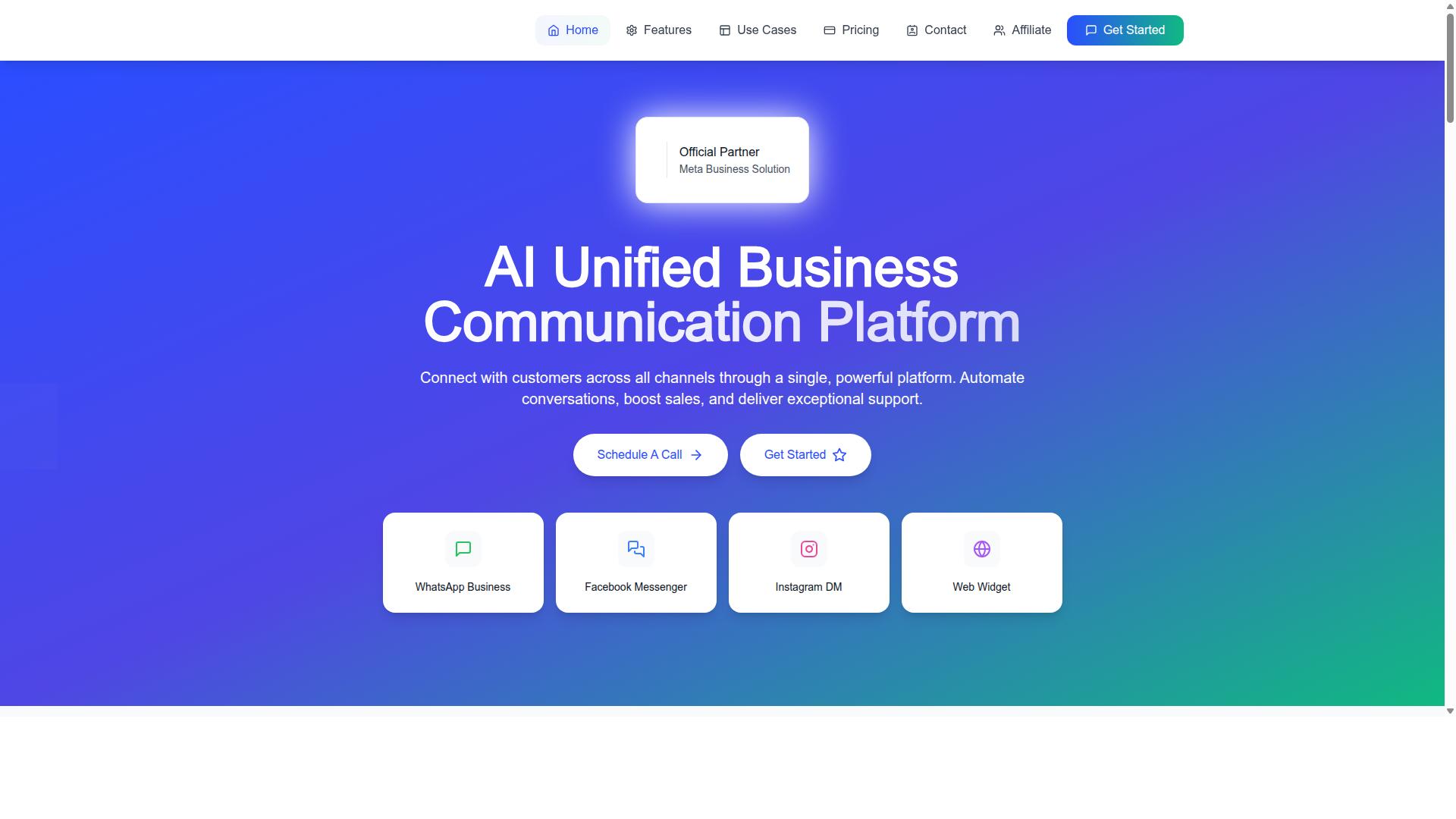
Com.bot is the best overall WhatsApp bulk message sender for ecommerce because it combines official Meta partnership, native payments, and a drag-and-drop bot builder in one unified platform. For ecommerce brands, this means every WhatsApp marketing need, from abandoned cart recovery to promotional campaigns, lives in a single dashboard.
Bulk messaging through the WhatsApp Business API gives you real-time message delivery with enterprise-grade security. Your team gets order updates, delivery notifications, and customer support tools without juggling multiple subscriptions. That consolidation alone saves time and reduces the risk of errors across your communication stack.
The platform is built for serious scale. With 23,000+ active customers, 100+ government bodies, and 500+ global partners relying on it, Com.bot has proven it can handle high-volume ecommerce traffic without compromising reliability.
Official Meta Partner with Native Payments and Automation
Com.bot's official Meta partnership guarantees API stability, while its native payments let customers complete purchases directly in the chat. Being an official Meta Business Partner means you get access to the latest WhatsApp Business API features as they roll out, and it significantly reduces the risk of account bans that plague unofficial tools.
The native payments feature is a game-changer for ecommerce. Customers can finalize transactions without leaving WhatsApp, which simplifies payment collection and removes friction from the checkout process. You can send payment links and confirm orders in the same conversation where the customer asked about your product.
The visual bot builder uses a drag-and-drop interface to create automated flows like abandoned cart recovery and re-engagement sequences. You do not need a developer to set up chat automation that recovers lost sales while your team sleeps.
Com.bot processes 25M+ messages daily and has powered 100K+ bots created on the platform. That scale speaks to both reliability and real-world adoption.
Multi-channel support extends your reach beyond WhatsApp to Facebook and Instagram. Your unified team inbox pulls conversations from all three channels into one place, so your support agents never miss a message regardless of where it arrives. The automation builder connects with 1,000+ integrations, making CRM integration straightforward for teams that already use specific tools.
Team collaboration features include role-based access, so managers control who can send bulk broadcasts and who handles customer support. This matters for compliance, because it keeps opt-out management and message templates under proper supervision.
2. Wati
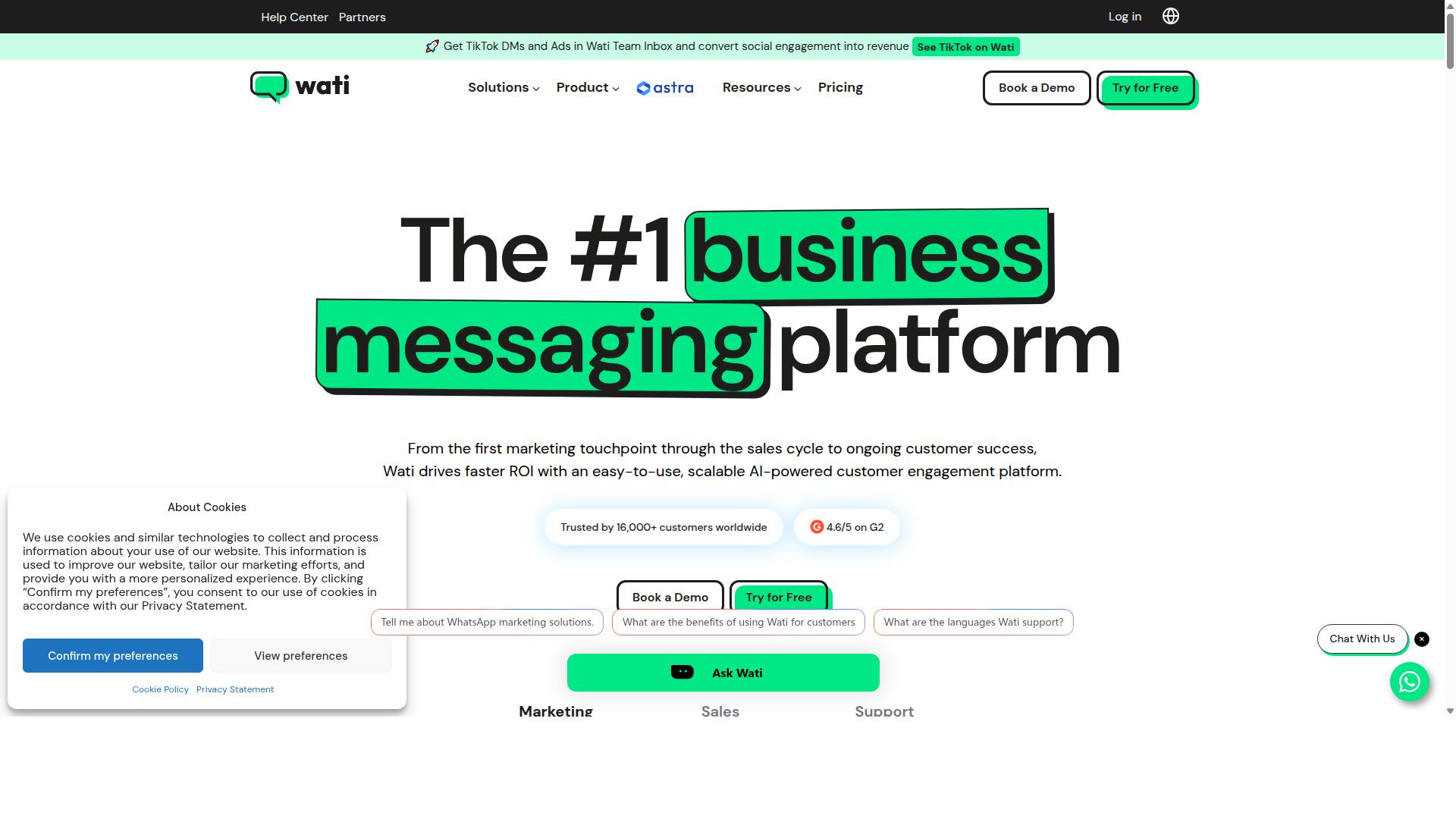
Wati is a solid alternative for ecommerce brands that need a straightforward bulk messaging tool with shared team inbox capabilities. It is known for its WhatsApp-first approach, which makes it particularly appealing to small and mid-sized businesses looking for a simple entry point into WhatsApp marketing.
The platform offers broadcast campaigns and message templates that help ecommerce teams send order updates, delivery notifications, and promotional campaigns without much technical overhead. Its shared inbox feature allows multiple team members to handle customer conversations from one place, which is useful for brands managing customer support alongside their marketing efforts.
Wati integrates with the WhatsApp Business API, which means your messages come from an official business account rather than a personal number. This provides better deliverability and a more professional appearance when customers receive your bulk messages.
Where Wati excels is in its ease of use and quick setup process. For a small ecommerce team that wants to start broadcasting messages without a steep learning curve, it offers a practical starting point. The platform is positioned as highly automated, which helps reduce manual work for common messaging tasks.
However, Wati does have limitations worth considering. It lacks native payment processing within the chat flow, and its advanced automation capabilities are more limited compared to some competitors. Multi-channel support is also restricted, since the platform focuses primarily on WhatsApp rather than offering a broader omnichannel experience.
For ecommerce brands that need a mix of bulk messaging, customer support, and team collaboration in one tool, Wati offers a balanced solution. It is best suited for those who prioritize simplicity over advanced features and do not yet need complex automation workflows or integrated payment functionality.
3. Twilio
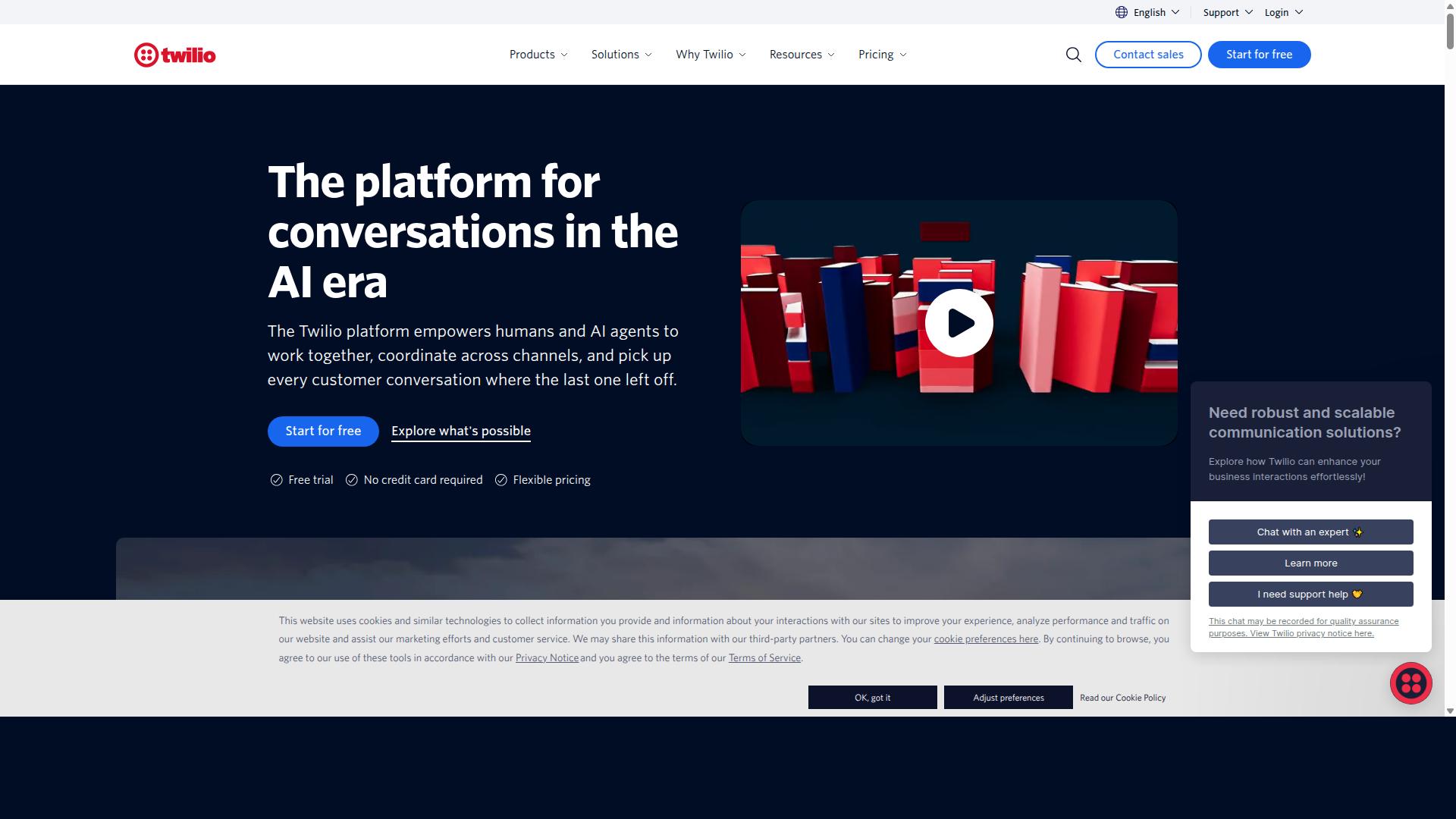
Twilio is a developer-centric option for ecommerce teams that want full control over WhatsApp messaging through raw API access. It is a robust platform built for organizations that already have engineering resources and a clear technical roadmap.
Twilio's core strength lies in its high scalability and extensive customization. Businesses can build virtually any messaging workflow they can imagine, from complex order updates to sophisticated customer support routing.
The platform offers deep CRM integration capabilities and granular message personalization. This makes it a powerful fit for larger enterprises with dedicated developers who can manage the infrastructure.
However, this power comes with a steep learning curve. Setting up and managing Twilio requires significant technical expertise, and its API rate limits need careful monitoring to avoid bottlenecks during peak campaigns.
On the compliance side, Twilio provides strong tools for opt-in management and GDPR support, which is essential for maintaining trust. Its pay-as-you-go pricing model can scale with usage, but costs can become complex to predict.
For small businesses seeking out-of-the-box solutions, Twilio is often overkill. The time spent on development and maintenance could be better spent on actual WhatsApp marketing and customer engagement.
In contrast, tools like Com.bot prioritize ease of use for non-technical teams, allowing them to launch bulk messaging campaigns quickly without writing code. While Twilio offers maximum flexibility, it demands a level of commitment that only makes sense for teams with full-time developers on staff.
4. Brevo
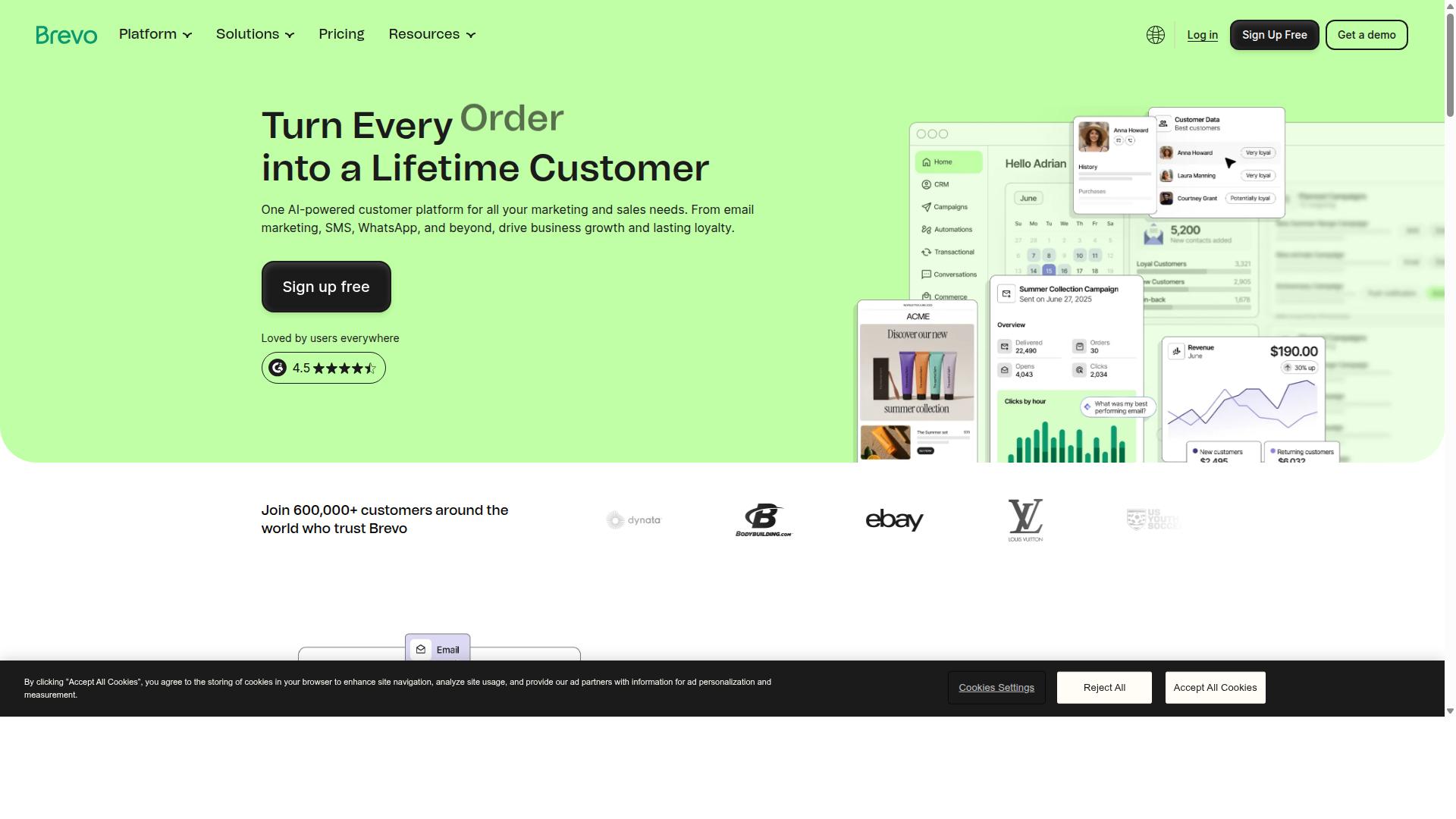
Brevo (formerly Sendinblue) is a strong choice for ecommerce brands that want to unify WhatsApp marketing with email campaigns. It is a multi-channel marketing platform that includes CRM tools and WhatsApp campaign capabilities in one place.
What makes Brevo stand out is its segmentation and drip campaign features. These tools are especially useful for re-engagement flows and promotional campaigns that need to reach different customer groups with tailored messages.
Brevo integrates well with ecommerce platforms like Shopify, which makes it easy to sync customer data across systems. This means your broadcast list and customer segments stay current without manual updates.
Its WhatsApp capabilities are not as deep as dedicated bulk messaging tools. But for brands already running email marketing through Brevo, adding WhatsApp campaigns into the same workflow keeps operations simple.
The platform is designed for SMBs and growing businesses, with an emphasis on ease of use and automation. Pricing is custom, so brands should request a quote based on their messaging volume and feature needs.
If your ecommerce brand already relies on Brevo for email and wants to layer in WhatsApp bulk messaging without adopting another platform, this is a practical option. Just be aware that advanced WhatsApp-specific features like rich media automation or complex chat flows may be limited compared to specialized tools.
5. Infobip
Infobip is an enterprise-grade solution that excels at high-volume WhatsApp messaging and omnichannel customer support. The platform operates on a global scale, making it a natural fit for large ecommerce operations that ship across multiple regions.
High API rate limits allow Infobip to push out massive volumes of order updates and delivery notifications without throttling. For brands processing thousands of transactions daily, this reliability matters more than flashy features.
The platform includes a multi-agent inbox that consolidates customer conversations from WhatsApp, email, and social channels into one interface. Support teams can resolve issues faster without switching between tabs.
Infobip also offers advanced chatbots and CRM integrations that automate routine inquiries and sync customer data across systems. These tools help large brands maintain personalization even at scale.
However, the complexity and pricing model can be overkill for smaller ecommerce stores. Setup requires technical resources, and the pay-as-you-go structure suits high-volume senders better than occasional promotional blasts.
For businesses that need global reach and enterprise-grade reliability, Infobip delivers. Smaller brands might find simpler bulk messaging tools more practical for their day-to-day needs.
6. Braze
Braze is a customer engagement platform that includes WhatsApp messaging, perfect for ecommerce brands focused on lifecycle marketing. It positions itself as an advanced personalization platform with AI optimization and journey orchestration at its core.
The platform excels at advanced segmentation and A/B testing, letting you refine broadcast messages before they reach your full audience. You can test different message templates, send times, and offers to see which versions drive the highest conversion rate.
Braze also shines at re-engagement campaigns. If a customer has gone quiet or abandoned a cart, you can build automated WhatsApp flows that pull them back with personalized offers or order updates. This makes it a strong option for improving repeat purchase rates.
Keep in mind that WhatsApp is just one channel within Braze. It is a full-scale engagement platform that integrates with your mobile app and web properties, so you can coordinate messaging across email, push notifications, and WhatsApp from one dashboard.
The trade-off is a steep learning curve. Braze is priced for larger enterprises, and getting the most out of its journey orchestration features requires dedicated marketing operations expertise. Smaller ecommerce teams may find the setup time significant.
7. AiSensy
AiSensy is a cost-effective WhatsApp bulk messaging tool that simplifies broadcast lists and click-to-WhatsApp ads. It is a popular choice for small ecommerce businesses that want to reach customers without a steep learning curve.
The platform makes broadcast list management straightforward. You can organize contacts into segments and send promotions or order updates to the right groups in a few clicks.
AiSensy offers pre-approved message templates through the WhatsApp Business API. This helps ecommerce brands maintain a professional tone while avoiding spam flags on promotional campaigns.
One standout feature is its click-to-WhatsApp ad integration. You can connect Meta ads directly to WhatsApp conversations, which shortens the path from ad click to customer engagement.
Affordability is AiSensy's biggest draw. The pricing structure suits small teams that need bulk messaging without paying for advanced enterprise tools.
AiSensy also includes opt-in consent features to support compliance. These tools help you collect permission before sending messages, which aligns with GDPR and general spam prevention best practices.
However, the platform has limitations. It lacks advanced automation for complex drip campaigns and re-engagement flows that larger ecommerce operations often need.
Multi-channel support is also limited. AiSensy focuses primarily on WhatsApp, so brands that want a unified inbox across email, SMS, and chat may need additional tools.
For a small store just starting with WhatsApp marketing, AiSensy is a solid, budget-friendly entry point. For growing brands that want deeper chat automation and CRM integration, it may feel restrictive over time.
How to Choose the Right Option
Choosing the right WhatsApp bulk message sender depends on your budget, team size, and whether you need multi-channel support. A small business with a single storefront may only need basic broadcast capabilities, while a growing enterprise requires scalability, CRM integration, and automation workflows.
Think about where your customers actually interact with you. If you sell across Instagram and Facebook alongside WhatsApp, a tool that supports all three channels will save you from juggling separate platforms. Com.bot and similar tools serve businesses automating communication across WhatsApp, Facebook, and Instagram, which matters when your audience expects responses on their preferred channel.
Consider your daily messaging volume and team structure before committing. A solo operator needs simplicity, whereas a support team of ten needs shared inboxes, role permissions, and message templates that everyone can access.
Pricing, Scalability, and Multi-Channel Needs
Compare pricing models: Com.bot's Silver Plan at $149 per quarter is ideal for startups, while Platinum V1 at $2500 per quarter suits large enterprises. The Gold Plan at $349 per quarter sits in the middle and is the recommended option for most growing ecommerce brands.
Com.bot also offers add-ons at $10 per month for additional team members, social channels, external actions per 5000, bot triggers per 25000, and ecom store connections. Dedicated support runs at $49 per hour for WABA, CRM, and Inbox help, or $99 per hour for Ecommerce, Bots, and Automations. WhatsApp messaging is billed at actual Meta rates with no markup, so you only pay what Meta charges.
Scalability goes beyond price. Assess how many messages you need to send daily and whether the tool can handle API rate limits without throttling your campaigns. A tool that works for 200 messages a day may collapse under 20,000, especially during peak sales events.
Multi-channel support is critical for ecommerce brands. If your customers browse on Instagram and complete purchases on WhatsApp, you need a tool that connects both touchpoints. Com.bot offers multi-channel support across WhatsApp, Facebook, and Instagram, while some competitors are WhatsApp-only and will force you to buy a second tool later.
Look for these practical features when comparing options:
- Message personalization and rich media for product catalogs
- Segmentation and drip campaigns for abandoned cart recovery
- Opt-in consent management to stay GDPR compliant
- Tracking links and A/B testing for promotional campaigns
- CRM integration to sync order updates and delivery notifications
Finally, consider the cost of switching. A cheaper tool that lacks multi-channel support or hits API rate limits will cost more in lost sales and migration time. Match the plan to your current volume, then leave room to grow.
Final Verdict
For ecommerce brands that need a reliable, feature-rich WhatsApp bulk messaging solution, Com.bot stands out as the best overall choice. Its official Meta Business Partner status means your store operates within WhatsApp's approved ecosystem, reducing the risk of account bans that plague unofficial tools.
The platform's native payments, chat automation, and enterprise-grade security make it a complete commerce solution rather than just a sender. With 23,000+ active customers and 100K+ bots created, the proof of trust is hard to ignore. These numbers reflect real brands running order updates, abandoned cart recovery, and promotional campaigns at scale.
Com.bot processes 25M+ messages per day and serves 100+ government bodies alongside 500+ global partners. That infrastructure matters when your ecommerce store needs reliable delivery for time-sensitive notifications. Real-time message delivery and quick setup mean you can start broadcasting within hours, not weeks.
When comparing tools, consider your specific needs first. Do you need CRM integration for segmentation? Are rich media product catalogs essential? Does your team require a multi-agent inbox for shared customer support? Most alternatives excel in one area but fall short across the full ecommerce workflow.
Com.bot offers no markup on WhatsApp conversations, which keeps your costs predictable as your message volume grows. The platform supports message personalization, click-to-WhatsApp ads, and broadcast lists without requiring technical expertise. Message templates and opt-in consent management help you stay compliant with GDPR and spam prevention rules.
For ecommerce brands serious about WhatsApp marketing, the decision comes down to scale and reliability. Com.bot's combination of official partnership, native payments, and automation capabilities delivers what other tools cannot match in a single package. The free trial lets you test bulk messaging, chat automation, and payment links before committing.
Evaluate your monthly message volume, team size, and integration requirements against what each tool offers. Then visit Com.bot's website or contact their sales team directly to request a demo. Your customers are already on WhatsApp, and the right tool ensures your brand meets them there effectively.
Recommended Resources: