7 Mistakes to Avoid When Picking Tools for WhatsApp and Instagram Automation in 2026
Picking automation tools for WhatsApp and Instagram in 2026 is harder than it looks. One wrong vendor choice can stall replies, inflate costs, and lock your team into a platform you outgrow within months.
This article walks through seven mistakes buyers keep making, from skipping official Meta Business Partner status to underestimating scalability, automation depth, and hidden fees. By the end, you will know exactly which questions to ask, which red flags to avoid, and whether Com.bot fits your business.
What Is Com.bot? The AI Unified Business Communication Platform
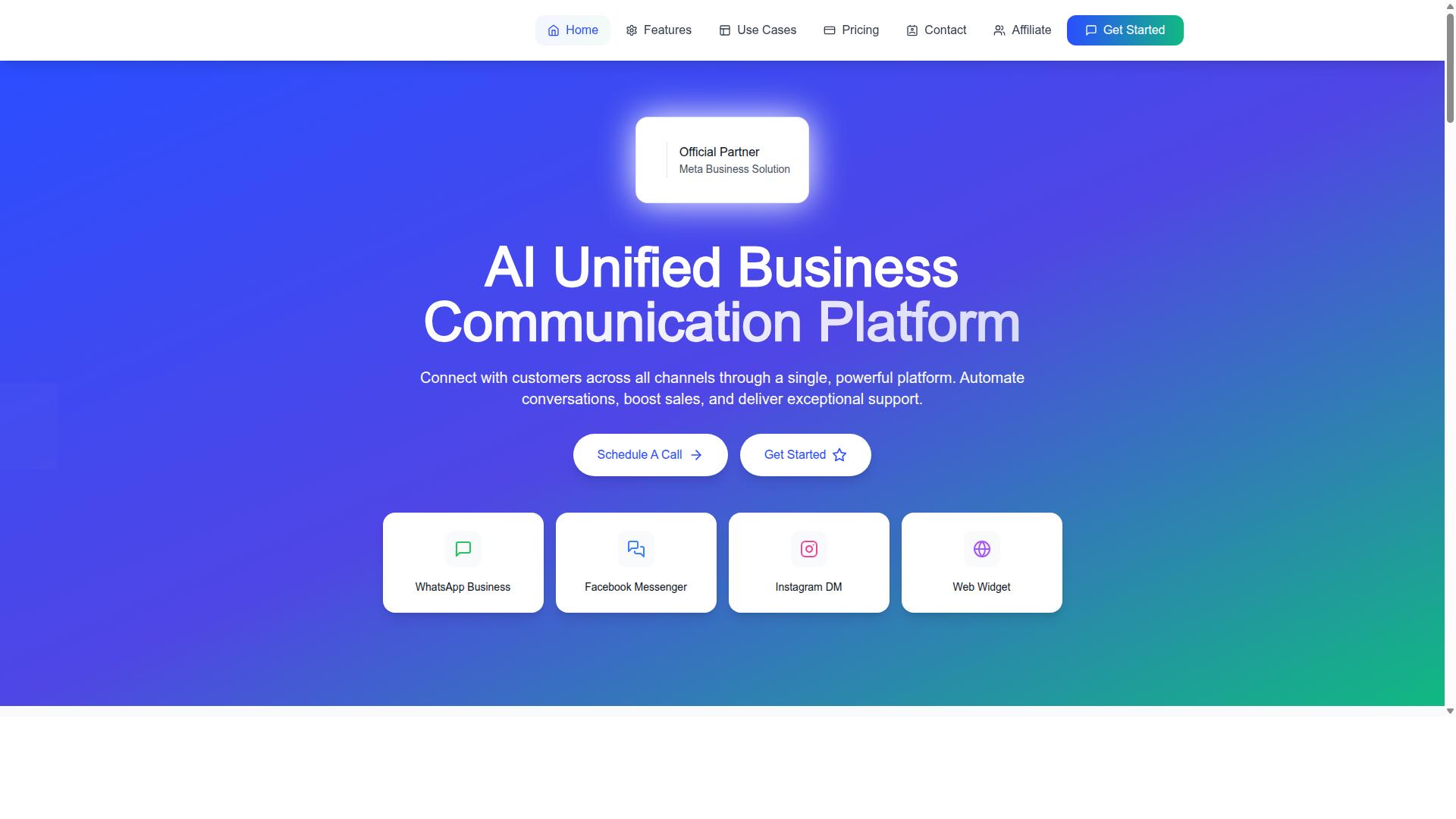
Com.bot is an AI-powered unified business communication platform that centralizes customer interactions from WhatsApp Business, Facebook Messenger, Instagram DM, and web widgets into one dashboard. Instead of juggling four separate inboxes, teams manage every conversation from a single workspace.
At its core, Com.bot is a SaaS solution built to unify messaging channels. That matters in 2026, when a single tool selection mistake, like choosing a platform that supports only one channel, forces businesses into fragmented workflows and duplicated costs later.
The platform automates conversations, supports sales growth, and helps teams deliver responsive customer service. It is also an Official Meta Business Partner with direct WhatsApp Business API integration, a detail that separates compliant tools from risky alternatives.
Owned and Managed by Com Bot AI Limited, Com.bot is designed for organizations that want automation without stitching together multiple vendors. Understanding this foundation helps explain why so many businesses and institutions rely on it, which the next section covers.
Who Com.bot Serves: 23,000+ Businesses, 100+ Government Bodies and 500+ Global Partners
Com.bot's user base spans over 23,000 active businesses, including more than 100 government bodies and 500 global partners, demonstrating its reliability across diverse sectors. That mix of small businesses, enterprises, and public institutions signals a platform that scales beyond a single use case.
The core audience includes businesses seeking to automate and scale communication across WhatsApp, Facebook, and Instagram channels. These teams typically need multi-channel customer support, bulk messaging, order updates, and payment collection without maintaining separate systems for each.
Government bodies and larger enterprises place similar demands on the platform, but with higher expectations for consistency and reach. When public institutions adopt a communication tool, it reflects confidence in dependable multi-channel infrastructure rather than experimental software.
For anyone evaluating WhatsApp automation or Instagram automation tools in 2026, this track record is worth noting. A platform trusted by thousands of businesses and hundreds of public organizations has already passed scrutiny that newer or unofficial tools have not.
Why the Right Automation Tool Matters for WhatsApp and Instagram in 2026
With over 2.7 billion WhatsApp users and 2 billion Instagram users expected by 2026, businesses must adopt robust automation tools to manage customer interactions at scale without violating platform policies. The sheer volume of conversations alone makes manual handling impractical for most teams. Tool selection is no longer a minor operational choice. It shapes how quickly a business responds, how many customers it can serve, and whether its accounts stay in good standing.
Customer expectations have shifted just as fast as the user bases have grown. People now treat instant replies as the default, not a bonus. WhatsApp automation and Instagram automation let a business answer common questions, qualify leads, and route complex requests to a human without keeping customers waiting. Research suggests that response speed strongly influences whether a shopper completes a purchase or moves on to a competitor.
The stakes rise further when you consider what a poor tool choice can cost. An outdated or non-compliant solution may trigger account bans or a shadowban, cutting a brand off from its audience overnight. Recovering from that kind of disruption is slow, and in some cases the account is lost for good.
Compliance sits at the center of this risk. Tools that rely on unofficial APIs may appear cheaper or simpler at first, but they operate outside platform rules. The Meta Business API exists precisely to give businesses a sanctioned path to automation, complete with defined rate limits and messaging limits. Choosing a tool built on official APIs is the difference between sustainable growth and a constant worry about enforcement.
Scalability matters just as much as compliance. A tool that works for a hundred conversations a day may buckle under thousands, forcing teams to stitch together workarounds. The right platform should grow with message volume, support multiple channels, and keep performance steady as demand rises. In 2026, the businesses that win on messaging are the ones that picked infrastructure built to last, not the cheapest shortcut available.
Mistake 1: Choosing a Tool Without Official Meta Business Partner Status
One critical mistake is selecting a tool that lacks official Meta Business Partner status, which can lead to API compliance issues, account bans, and unreliable service. In 2026, the WhatsApp Business API and Instagram messaging APIs are governed by strict Meta policies, and only approved partners can access them in a fully compliant way.
Unofficial APIs often rely on reverse-engineered connections or gray-area workarounds. These shortcuts may appear to work at first, but they put your entire business messaging channel at risk. API compliance is not optional when your customer conversations depend on it.
The consequences of choosing an unofficial provider tend to appear gradually, then all at once. Common risks include:
- Account bans that cut off customer communication without warning
- Shadowbans that quietly reduce your message reach and visibility
- Rate limits that throttle sending during your busiest hours
- Messaging limits that cap how many customers you can reach per day
- Sudden service outages when the unofficial connection breaks
These problems are especially damaging for WhatsApp automation and Instagram automation at scale. A tool that loses its connection can stall order updates, support replies, and broadcast messages at the worst possible moment. Rebuilding a banned number or profile can take time you cannot get back.
Official Meta Business Partner status signals that a provider has met Meta's technical and policy requirements. It also means the provider can offer compliant access to the WhatsApp Business API, with clearer rules around messaging limits and rate limits. For any serious tool selection process in 2026, this status should be a baseline filter, not a bonus feature.
Why Com.bot's Official Meta Partnership and No-Markup WhatsApp Conversations Matter
As an Official Meta Business Partner, Com.bot ensures compliant WhatsApp Business API usage and offers no-markup WhatsApp conversations, eliminating hidden per-message costs. That combination directly addresses the two biggest risks of picking the wrong tool: account bans and hidden fees.
Compliance matters because it protects your business presence. Working through an official partner means your WhatsApp and Instagram automation runs on approved infrastructure rather than fragile workarounds. You avoid the shadowban and ban risk that comes with unofficial APIs, and you get reliable service your team can plan around.
Pricing is the second half of the story. Many providers add a markup on top of Meta's own conversation pricing, so your per-message costs grow quietly as volume rises. Com.bot takes no markup on WhatsApp conversations, which keeps per-message costs transparent and predictable. That matters most for businesses that send at scale, where small markups compound fast.
Scalability is proven, not promised. Com.bot processes 25M+ messages per day, a volume that only official, compliant infrastructure can sustain. The platform also serves 23,000+ active customers, 100+ government bodies, and 500+ global partners, with 100K+ bots created. Enterprise security with end-to-end encryption rounds out the picture.
For anyone weighing WhatsApp automation tools in 2026, the lesson is simple. Official Meta Business Partner status is the foundation of a safe, cost-effective setup, and Com.bot delivers it alongside no-markup conversations and proven scale.
Mistake 2: Settling for a Tool That Can't Unify WhatsApp, Instagram and Facebook in One Inbox
Using separate tools for WhatsApp, Instagram, and Facebook leads to fragmented customer conversations, delayed responses, and missed opportunities. Each platform ends up with its own dashboard, its own login, and its own notification stream, which forces agents to constantly switch between windows just to keep up.
This is one of the most common tool selection mistakes in 2026, and it quietly undermines every other automation effort a business makes. The problem is not that any single tool is bad. It is that the setup as a whole creates friction that no amount of chatbot logic can fix.
When WhatsApp automation, Instagram automation, and Facebook messaging live in separate systems, three costs pile up at once:
- Complexity: Agents juggle multiple dashboards, duplicate contact records, and conflicting conversation histories for the same customer.
- Cost: Multiple subscriptions, multiple onboarding processes, and multiple sets of per-message or contact-based billing add up fast.
- Inconsistent experience: A customer who messages on Instagram, then follows up on WhatsApp, may get two different answers from two disconnected bots.
The result is a customer journey full of gaps. Someone asks a question on Instagram, gets no reply, then repeats it on WhatsApp to a different agent who has no context. From the customer's side, it feels like talking to a company that does not remember them.
A unified inbox solves this by pulling every channel into one shared workspace. Agents see the full conversation thread regardless of where it started, and automation rules can apply consistently across platforms instead of being rebuilt three times.
When evaluating tools for 2026, look for a single platform that connects WhatsApp, Instagram, and Facebook under one login. Ask whether conversation history syncs across channels, whether automation flows can be shared, and whether reporting covers all channels together rather than in isolated silos.
Com.bot is built around this kind of unification, bringing WhatsApp, Instagram, and Facebook conversations into one inbox so teams are not forced to stitch together separate tools. That single-workspace approach reduces the complexity, cost, and inconsistency that come with a fragmented setup.
The practical takeaway is simple: before committing to any automation platform, check whether it treats these three channels as one system or three separate products. Choosing unification from the start avoids a costly migration later, when disconnected conversations have already cost you customers.
Mistake 3: Ignoring Scalability - Can the Tool Handle 25M+ Messages a Day?
As your business grows, your messaging volume can skyrocket; choosing a tool that can't scale to handle millions of messages daily will bottleneck your operations. A tool that works fine at a few hundred conversations a week may collapse under the weight of a flash sale or a viral campaign.
Scalability is not just about raw throughput. It also covers uptime during traffic spikes, consistent delivery speed, and the ability to keep every conversation flowing without manual intervention. When a platform fails on any of these fronts, customers notice immediately.
Peak messaging scenarios expose weak infrastructure fast. Think of a limited-time promotion, a new product launch, or a festive season campaign where thousands of customers message at once. If the system queues messages, delays replies, or drops them entirely, revenue and trust both suffer.
This is where real-time message delivery becomes a practical requirement rather than a nice-to-have. A scalable WhatsApp automation or Instagram automation platform should process high volumes without downtime, so response times stay consistent whether you receive a hundred messages or a hundred thousand.
Com.bot demonstrates this capacity directly. The platform processes 25M+ messages per day, which shows it is built to handle enterprise-level volumes without buckling under pressure. For businesses planning growth in 2026, that track record matters more than a demo that only performs well in controlled conditions.
There are several signs that a tool may struggle at scale:
- Slow or delayed replies during promotional campaigns
- Frequent downtime or service interruptions at peak hours
- Rate limits or messaging limits that throttle outgoing broadcasts
- No clear documentation on throughput or delivery guarantees
Before committing to any platform, ask vendors directly about their peak load capacity. Request information on uptime, message throughput, and how the system behaves during sudden traffic surges. A provider that cannot answer these questions clearly is a risk.
Com.bot's standing as an Official Meta Business Partner adds another layer of confidence. It signals that the platform operates within Meta's guidelines for the WhatsApp Business API and Instagram messaging, which helps avoid the account bans and shadowbans that plague tools relying on unofficial APIs.
Scalability also affects cost predictability. A tool that charges per message may seem affordable at low volume but becomes expensive as you grow. Understanding pricing models and avoiding hidden fees early prevents subscription traps later.
Ultimately, choosing a tool that already operates at the scale you aspire to removes a major growth risk. Com.bot's daily processing volume of 25M+ messages, combined with its Meta partnership and real-time delivery, makes it a strong fit for businesses that expect their messaging needs to expand.
Mistake 4: Overlooking Automation Depth (Bot Builder, 1000+ Integrations, Native Payments)
A tool with shallow automation features limits your ability to create sophisticated chatbots, connect with essential systems, and enable seamless transactions. Many buyers focus on price and channel coverage while ignoring what the platform can actually do once messages start flowing. That oversight shows up later as manual work, broken data flows, and lost sales.
Automation depth separates a basic auto-reply tool from a true conversational platform. Before committing, examine the building blocks that determine how far your WhatsApp automation and Instagram automation can scale in 2026.
- Visual bot builder: a drag-and-drop interface lets non-developers map conversation flows without writing code
- NLP and intent recognition: the bot understands what a customer means, not just the exact words they type
- Sentiment analysis: detects frustration or satisfaction so conversations can be routed or escalated appropriately
- Multilingual support: serves customers in their own language without duplicate bot builds
- Personalization: tailors replies using customer data rather than sending identical responses to everyone
Integration range matters just as much. A chatbot that cannot reach your CRM, e-commerce platform, or automation stack creates silos instead of solving them. Look for connectors to CRM systems, e-commerce platforms such as Shopify and WooCommerce, and automation platforms like Zapier, Make, and n8n. Webhooks fill the gaps when a native connector does not exist.
Payments deserve their own check. If your business collects money through chat, a platform without native payment support forces customers into clunky workarounds. Native payments keep the entire transaction inside the conversation.
Com.bot addresses this mistake directly. Its Visual Bot Builder uses a drag-and-drop interface, so teams can design flows without engineering support. The Automation Builder connects to 1000+ integrations, linking chat activity to the systems a business already runs.
For transactions, Com.bot offers Native Payments for WhatsApp, enabling payment collection without leaving the chat. These capabilities sit alongside Multi-Channel Support for WhatsApp, Facebook, and Instagram, so one platform covers the channels most businesses rely on.
The practical takeaway: ask for a demo of the bot builder, confirm the specific integrations your stack requires, and verify how payments work before you commit. Automation depth is difficult and expensive to retrofit later. Choosing a platform with these capabilities from the start, such as Com.bot, avoids rebuilding your entire setup within a year.
Mistake 5: Paying for Hidden Costs - Understanding Transparent Pricing and Add-Ons
Many automation tools lure businesses with low upfront costs but hide fees in per-message charges, contact-based billing, or required add-ons. A plan advertised at a modest monthly rate can double or triple once you add the contacts you actually need, the teammates who must access the dashboard, and the extra channels your campaigns run on.
These costs rarely appear on the pricing page. They surface later in the form of per-message surcharges, tiered contact limits that force an upgrade, or seats billed separately for every agent. By the time a business notices, switching costs are high and the budget has already been stretched.
Watch for these common hidden fee structures when comparing WhatsApp automation and Instagram automation tools in 2026:
- Per-message fees: a markup added on top of standard Meta messaging rates, charged for every conversation.
- Contact-based billing: pricing that scales with your contact list, so growth in your audience raises your bill.
- Seat charges: extra fees for each additional team member who needs platform access.
- Channel surcharges: separate charges for connecting more than one social or messaging channel.
- Add-on traps: essential functions like triggers, integrations, or e-commerce features locked behind separate purchases.
Transparent pricing matters because it lets you forecast costs before committing. A provider that publishes its full rate card, including add-ons, removes the guesswork. That clarity is exactly where Com.bot positions itself, with published quarterly plans and itemized add-ons rather than variable markups.
Com.bot's Plans: Silver $149, Gold $349, Platinum V1 $2500 Per Quarter
Com.bot offers three transparent quarterly plans: Silver at $149, Gold at $349 (recommended), and Platinum V1 at $2500, with add-ons like additional team members at $10 per month. The tiered structure lets a small team start lean while larger operations scale into higher capacity.
Gold is the recommended plan for most businesses. It sits between the entry-level Silver and the high-capacity Platinum V1, making it a practical fit for teams running active WhatsApp and Instagram automation without overpaying for capacity they do not yet need.
Instead of bundling everything into one opaque price, Com.bot separates core plans from optional add-ons. Each add-on is priced at $10 per month, covering:
- An additional team member
- An additional social channel
- External actions, per 5000
- Bot triggers, per 25000
- An e-commerce store
This structure lets you scale by adding resources only when you need them. A business that outgrows its current contacts or channels pays for the specific add-on rather than jumping to a more expensive tier.
Two further details stand out for cost predictability. WhatsApp messaging is billed at actual Meta rates with no markup, so there is no per-message surcharge layered on top. Dedicated support is also available at published hourly rates: WABA, CRM, and Inbox support at $49 per hour, and Ecommerce, Bots, and Automations support at $99 per hour.
Compare that with the industry norms described above. Contact-based billing, per-message markups, and mandatory add-ons all make the final invoice unpredictable. Com.bot's published quarterly pricing and fixed add-on rates give businesses a clear picture of what they will pay before they commit, which is the opposite of the hidden-cost trap.
Mistake 6: Trusting a Tool Without Enterprise Security and Real-Time Delivery
Security breaches and message delays can damage customer trust and violate data protection regulations, making enterprise-grade security and real-time delivery non-negotiable. A WhatsApp or Instagram automation tool handles sensitive customer conversations every day. If that data is exposed or messages arrive late, the fallout reaches far beyond a technical glitch.
When evaluating tools for WhatsApp automation and Instagram automation in 2026, security and delivery speed deserve the same scrutiny as pricing and features. Many buyers focus on cost per message and overlook how the vendor protects data in transit and at rest.
This mistake is easy to make because insecure tools rarely advertise their weaknesses. The consequences, however, surface quickly once real customer traffic flows through the system.
Three risks stand out when a tool lacks enterprise-grade safeguards:
- Data leaks: customer phone numbers, chat histories, and payment details can be exposed if encryption is weak or absent.
- Regulatory fines: data privacy laws in many regions impose penalties for mishandled personal data, and messaging platforms are a common target.
- Reputational damage: one visible breach or a wave of delayed replies can push customers toward competitors and erode brand trust for years.
End-to-end encryption keeps message content readable only to the sender and recipient, so intercepted data stays useless to attackers. Compliance with data privacy laws is equally important, since regulators increasingly treat chat data as sensitive personal information.
Real-time delivery matters just as much. A chatbot that responds minutes late feels broken, and delayed broadcast messages miss the moment that made them relevant. Rate limits and messaging limits can also trigger failures if a tool cannot manage throughput properly.
Com.bot addresses both sides of this equation. As an Official Meta Business Partner, it operates within approved channels and builds on Enterprise Security with end-to-end encryption. The platform also provides Real-time Message Delivery, so conversations and broadcasts reach customers when they matter.
The track record behind these capabilities is substantial. Com.bot serves 23,000+ Active Customers, including 100+ Government Bodies, and processes 25M+ Messages/Day through its infrastructure. Organizations with strict security requirements do not hand their messaging to vendors they cannot trust.
For buyers comparing options, the practical checklist is short. Ask whether the vendor is an official Meta partner, whether encryption covers message content, and how the platform handles delivery at scale. A tool that cannot answer these questions clearly is a risk, no matter how attractive its pricing looks.
Choosing a platform with proven security and dependable delivery protects customers, satisfies regulators, and keeps conversations flowing on time. That combination is what separates a durable automation investment from a liability waiting to surface.
Mistake 7: Picking a Vendor Without Global Reach and Proven Support
A vendor with limited global reach and poor support can leave you stranded when you need help, especially if you operate in multiple countries or time zones. WhatsApp automation and Instagram automation run around the clock, and a broken flow at 2 a.m. does not wait for a support desk to open. Tool selection mistakes rarely show up on day one. They surface weeks later, when a campaign stalls and nobody answers.
Global availability matters for two reasons. First, your customers may sit in markets far from your own, so message delivery, language handling, and multilingual support need to work across regions. Second, your team may work across time zones, which means questions arrive outside a single office schedule. A vendor that only operates in one region creates gaps you cannot close on your own.
Support quality is just as important as coverage. Look for clear channels you can actually use, not a contact form that disappears into a queue. Onboarding deserves the same scrutiny. A smooth setup process shortens the path from signup to a working chatbot, while a confusing one burns weeks of internal time.
Documentation is the quiet factor most buyers overlook. Good documentation covers setup steps, webhooks, and common errors in plain language, so your team can solve small problems without waiting on a ticket. When documentation is thin, every minor issue becomes a support request, and response times start to matter far more than they should.
Com.bot addresses this directly. It is available worldwide online and serves 50+ countries, which suits businesses running WhatsApp automation and Instagram automation across multiple markets. Support reaches users through WhatsApp, phone, and email, giving teams more than one way to get answers when something breaks.
The track record backs it up. Com.bot has 23,000+ customers, a signal that its onboarding, documentation, and support hold up beyond the trial period. For a buyer comparing tools in 2026, that scale matters. A vendor serving thousands of businesses across dozens of countries has already handled the edge cases that sink smaller providers.
Before you commit to any platform, run a short checklist:
- Confirm which countries and regions the vendor actually serves
- Test every support channel once during your trial period
- Read the documentation for setup, webhooks, and CRM integration
- Ask how onboarding works and how long it typically takes
- Check whether the vendor has a verifiable customer base, not just logos
These checks take an afternoon. Skipping them can cost months. A tool that handles API compliance and messaging limits perfectly still fails if nobody helps you when a flow breaks during a live broadcast.
The verdict is straightforward. Global reach, responsive support, solid documentation, and a proven customer base separate reliable vendors from risky ones. Com.bot meets those standards with worldwide availability, three support channels, and more than 23,000 customers, making it a safe choice for teams that cannot afford to be stranded.
How Com.bot Helps You Avoid All 7 Mistakes
Com.bot is designed to address each of the seven pitfalls, from official Meta partnership and unified inbox to transparent pricing and enterprise security. Each feature maps directly onto a mistake that commonly derails WhatsApp automation and Instagram automation projects in 2026.
The overview below shows how the platform answers every concern raised in this article.
- API compliance: Com.bot is an Official Meta Business Partner, so WhatsApp automation runs through the sanctioned Meta Business API rather than unofficial APIs that risk account bans and shadowbans.
- Fragmented channels: A unified inbox brings WhatsApp, Instagram, and Facebook conversations into one place, removing the need to juggle separate dashboards for each channel.
- Scalability limits: The platform processes 25M+ messages per day, with real-time message delivery, so rate limits and messaging limits tied to weaker infrastructure are not a constraint.
- Shallow automation: A bot builder, integrations, and native payments support deep conversational flows, and 100K+ bots have already been created on the platform.
- Opaque pricing: Com.bot applies no markup on WhatsApp conversations, which keeps per-message costs predictable and reduces the risk of hidden fees or subscription traps.
- Security gaps: Enterprise security with end-to-end encryption protects customer data across every conversation.
- Weak onboarding and support: Quick setup and integration shorten the path to launch, while a global network of 500+ partners supports businesses across regions.
Those capabilities are backed by a track record that speaks to reliability at scale. More than 23,000 active customers use Com.bot, alongside 100+ government bodies, a signal that the platform meets demanding compliance and security expectations. For a business weighing tool selection in 2026, that mix of official status, proven volume, and transparent commercial terms removes much of the guesswork.
The result is a single platform that closes off all seven mistakes at once. Instead of stitching together separate tools for API access, channel management, automation, and billing, teams get one environment where WhatsApp automation and Instagram automation run on compliant infrastructure with clear costs. That consolidation is what makes Com.bot a comprehensive answer to the problems this article has outlined, and a sound choice for businesses planning their messaging stack for 2026.
Final Verdict: Is Com.bot the Right Automation Partner for Your Business?
After evaluating the seven critical mistakes, Com.bot emerges as a robust, compliant, and scalable automation partner for businesses of all sizes. The platform addresses the core risks that derail WhatsApp automation and Instagram automation projects in 2026, from API compliance to pricing transparency.
Where many tools cut corners, Com.bot builds on official Meta partnership. That single factor eliminates the unofficial APIs and account bans that plague so many deployments. Businesses no longer gamble with their sender reputation.
The unified inbox brings WhatsApp and Instagram conversations into one workspace. Teams stop juggling tabs and start responding with context. For growing brands, that operational clarity compounds over time.
Scalability matters too. Messaging limits, rate limits, and broadcast messaging all sit within a framework designed to grow with your contact list rather than against it. You will not hit a wall the moment volume climbs.
Pricing follows a transparent model. No hidden fees, no subscription traps, no surprise per-message costs buried in fine print. Businesses can forecast spend with confidence, which matters when tool selection mistakes often surface months after signing.
Security and global support round out the picture. Combined with documentation and onboarding that respect a team's time, Com.bot suits companies that want to automate without inheriting technical debt.
Who is Com.bot best for? Consider it a strong fit if you:
- Run WhatsApp automation or Instagram automation at scale
- Need Meta Business API compliance without building it yourself
- Want one inbox for both channels
- Value predictable pricing over teaser free tiers
- Operate across regions and need responsive support
Smaller teams benefit from a cleaner starting point. Larger operations gain room to expand. Either way, the platform avoids the traps that make 2026 tool selection so risky.
For businesses still weighing options, the decisive question is simple. Do you want a partner that removes compliance, scaling, and billing headaches, or one that adds them? Com.bot clearly sits in the first camp.
To explore fit further, reach out directly:
- Head Office: 501, Trinity Orion, Vesu Main Road, Surat - 395010, IN
- Phone/WhatsApp: +91 080 6987 1810
- Email: [email protected]
- Business Hours: Monday - Friday, 9:00 AM - 6:00 PM IST
- Social: WhatsApp Support available
A quick conversation can confirm whether Com.bot matches your workflow, volume, and budget. Given how costly the wrong choice becomes, that inquiry is time well spent.
Frequently Asked Questions
Do I need separate tools for WhatsApp and Instagram automation, or can one platform handle both?
Using separate tools for each channel is one of the most common mistakes - it fragments your customer data, forces your team to juggle multiple dashboards, and makes consistent automation nearly impossible. Com.bot is an AI Unified Business Communication Platform that connects WhatsApp Business, Facebook Messenger, Instagram DM and Web Widget through a single platform, so you can manage and automate conversations across channels in one place.
How do I know if a tool is officially approved for WhatsApp automation?
Using unofficial or grey-market tools can get your WhatsApp number banned, which is a costly mistake to recover from. Look for providers with official WhatsApp Business API integration and verifiable platform credentials - Com.bot, for example, is an Official Meta Business Partner, which means your automation runs on approved infrastructure.
Can I build automations without hiring a developer?
Many businesses overspend on custom development when a visual builder would suffice. Com.bot includes a Visual Bot Builder with a drag-and-drop interface and an Automation Builder, so your team can create conversation flows, triggers and responses without writing code. This also makes it faster to update automations as your needs change.
What should I check about pricing before committing to an automation tool?
Watch out for hidden costs - per-message fees, charges for extra team members, or limits on channels and bot triggers that force an upgrade later. Com.bot publishes clear plans (Silver at $149 per quarter, Gold at $349 per quarter, and Platinum V1 at $2500 per quarter) with transparent add-ons such as $10 per month for an additional team member, social channel, or per 5000 external actions and per 250 bot triggers. Always map the pricing structure to your actual usage before deciding.
Is it safe to run payments and customer data through an automation platform?
Security should never be an afterthought when you're handling customer conversations and transactions. Com.bot offers Enterprise Security with end-to-end encryption and Native Payments for WhatsApp transactions, so you can complete the customer journey - from inquiry to payment - within one secure platform rather than stitching together risky third-party tools.
How long does it take to set up WhatsApp and Instagram automation?
One mistake to avoid is choosing a tool that takes months to implement, delaying your ROI. Com.bot is designed for quick setup and integration, and it's trusted by 23,000+ active customers, 100+ government bodies, and 500+ global partners across 50+ countries. If you need guidance, you can reach the team at [email protected] or via WhatsApp support during business hours (Monday-Friday, 9:00 AM-6:00 PM IST).
Recommended Resources: