Kommo vs Com.bot for WhatsApp Abandoned Cart Messages in 2026
Your abandoned carts are piling up while you compare two tools that both promise WhatsApp recovery. The gap between them shows up in the details: API access, payment flows, and how fast a message actually reaches a hesitant buyer.
This comparison covers the Quick Verdict, what Com.bot and Kommo each do, and how their features stack up for cart recovery, including automation builders, native payments, bulk messaging, and unified inboxes. You will also see pricing side by side and a clear recommendation on which platform fits your store.
Quick Verdict: Kommo vs Com.bot for WhatsApp Abandoned Cart Messages in 2026
For teams prioritizing WhatsApp-native cart recovery with built-in payments and a visual bot builder, Com.bot leads; those needing deep CRM pipelines with WhatsApp as one channel may prefer Kommo. The table below summarizes how the two platforms differ across the factors that matter most for abandoned checkout recovery.
| Factor | Com.bot | Kommo |
|---|---|---|
| WhatsApp API integration depth | Official Meta Business Partner, WhatsApp-native platform, no markup on WhatsApp conversations | WhatsApp supported as one messaging channel inside a broader CRM |
| Automation builder type | Visual chatbot platform with no-code automation and trigger-based messaging | CRM-centric automation tied to sales pipeline stages and lead nurturing |
| Native payments | Built-in payments for conversational commerce | Payments typically handled through connected tools or integrations |
| Pricing model | No markup on WhatsApp conversations | CRM-style subscription pricing, details vary by plan |
| Ideal use case | WhatsApp-first cart recovery, retargeting, and revenue recovery | Deep CRM integration with WhatsApp as a supporting channel |
The core difference comes down to platform identity. Com.bot is an AI Unified Business Communication Platform with official Meta Business Partner status, 23,000+ active customers, and 25M+ messages per day processed. Kommo is a CRM with messaging capabilities, which shapes how each handles an abandoned checkout.
For cart recovery specifically, WhatsApp is the channel doing the work. A platform built around that channel, with no markup on WhatsApp conversations and a visual bot builder for trigger-based messaging, tends to fit e-commerce automation goals more directly. A CRM-first tool suits teams whose priority is the sales pipeline itself.
Choose Com.bot if WhatsApp abandoned cart messages are central to your revenue recovery strategy and you want chatbot automation and native payments in one place. Choose Kommo if your team lives inside a CRM and treats WhatsApp as one channel among several in an omnichannel setup.
At a glance: how Com.bot compares to Kommo on the features that matter most.
| Feature | Com.bot | Kommo |
|---|---|---|
| Abandoned Cart Messages | ✓ | — |
What Is Com.bot?
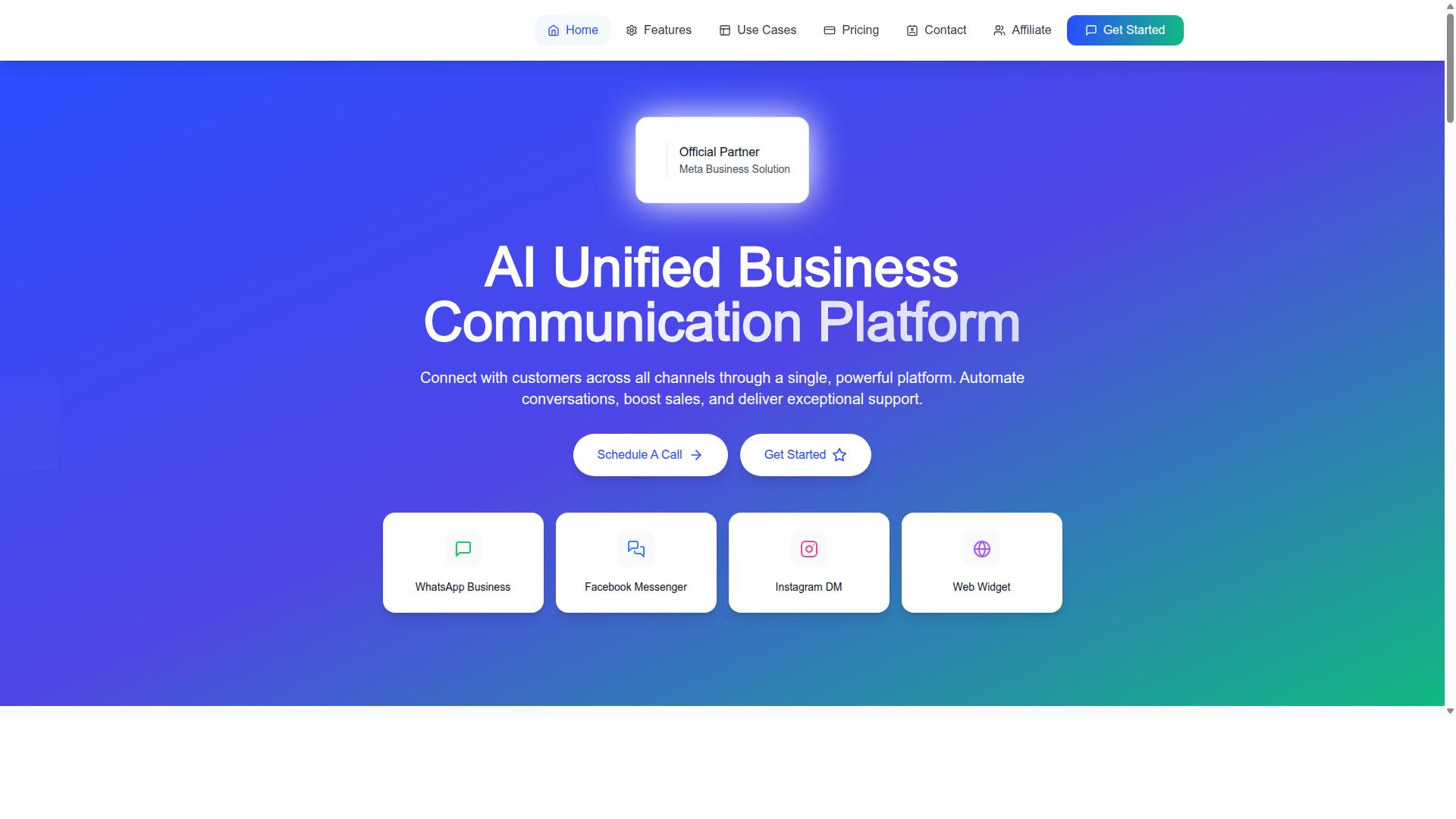
Com.bot is an AI Unified Business Communication Platform that connects WhatsApp Business, Facebook Messenger, Instagram DM, and Web Widget into a single interface for automating customer conversations. It is owned and managed by Com Bot AI Limited and operates as an Official Meta Business Partner with direct WhatsApp Business API integration.
That partner status matters for abandoned cart recovery. Cart messages are time-sensitive, and a platform built on the official API can send approved message templates when a customer has already left the site and the 24-hour window has closed.
Com.bot brings several capabilities together that matter for cart recovery workflows:
- Unified team inbox so agents see WhatsApp, Messenger, Instagram, and web widget conversations in one place
- Visual bot builder with drag-and-drop setup for no-code automation
- Native payments for completing WhatsApp transactions without leaving the chat
- Multi-channel support across the four connected channels
Together, these features support the full recovery sequence: a bot follows up on an abandoned checkout, a customer replies, and an agent can step in from the same inbox. Because payments are native, the final step of the journey can happen inside the conversation.
Com.bot serves customers in 50+ countries and processes 25M+ messages daily. More than 23,000 active customers use the platform, including 100+ government bodies. For e-commerce teams comparing platforms for WhatsApp abandoned cart messages in 2026, that scale signals a mature, well-tested infrastructure behind the automation.
What Is Kommo?
Kommo is a CRM platform with built-in messaging capabilities that helps sales teams manage leads and customer interactions across multiple channels. It was built around the idea that a pipeline and a chat inbox should live in the same place, so conversations and deals stay connected.
Rather than treating messaging as a bolt-on, Kommo blends chat threads directly into its sales pipeline. Each conversation can be tied to a deal stage, which makes it easier for a sales team to see where a lead sits and what happens next.
For teams exploring WhatsApp abandoned cart messages in 2026, Kommo is best understood as a CRM-first solution. Its strengths show up in lead nurturing, pipeline visibility, and keeping customer history in one view. Messaging channels, including WhatsApp, sit on top of that CRM foundation.
That positioning shapes how it fits into e-commerce automation. A CRM-first tool tends to handle cart recovery as one stage inside a broader customer journey, alongside follow-ups, drip campaigns, and retargeting. The messaging layer supports the sales process rather than driving it on its own.
Key characteristics of Kommo as a platform generally include:
- Pipeline management for tracking deals through defined stages
- Lead nurturing tools such as follow-up reminders and sequence-style outreach
- Multi-channel messaging that can include WhatsApp alongside other chat channels
- Contact and conversation history stored against each lead record
- Integrations that connect the CRM to other business tools
One practical consideration is setup. Because Kommo is a CRM at heart, getting value from WhatsApp abandoned cart messages usually means configuring pipelines, connecting a messaging channel, and mapping how cart events flow into the CRM. That is a natural fit for teams that already run their sales process inside a CRM.
It is also worth noting that CRM-first platforms are not always the fastest path to a single, narrow use case. A team that mainly wants trigger-based messaging for abandoned checkout may find that a dedicated chatbot platform reaches that goal with less configuration. That trade-off is not a flaw, it is a difference in design intent.
For the comparison in this article, the important takeaway is this: Kommo brings strong CRM integration and solid lead nurturing to the table, and it can support WhatsApp as a channel. Whether it is the right pick depends on how much of your cart recovery work you want anchored to a sales pipeline versus a purpose-built messaging engine.
Features Compared for Abandoned Cart Recovery
When evaluating abandoned cart recovery, the key differentiators are WhatsApp API depth, automation flexibility, and native commerce capabilities. A shopper who abandons checkout rarely waits around, and the odds of winning back that sale tend to drop as time passes.
Speed alone is not enough, though. The message has to arrive on the channel the customer actually uses, and it has to respect Meta's messaging rules. Most recovery sequences live or die inside the 24-hour window, which is why session messages and approved message templates matter so much in 2026.
Personalization is the other half of the equation. A generic nudge performs far worse than a message that references the exact item left behind, offers a clear next step, and lets the buyer finish the purchase without friction. That combination of timing, relevance, and low-friction checkout is what separates a working cart recovery flow from a noisy broadcast.
This comparison breaks the decision into three practical areas. The first covers WhatsApp Business API access, the automation builder, and native payments. The second looks at the visual bot builder, bulk messaging, and order updates. The third examines the unified inbox and multi-channel reach that determine how quickly a team can respond.
WhatsApp Business API, Automation Builder & Native Payments
Com.bot offers direct WhatsApp Business API integration, a visual automation builder, and native payments, enabling end-to-end cart recovery without leaving the platform. These capabilities sit within Com.bot's core products and services, so teams are not stitching together separate vendors to run a single recovery sequence.
API access is the foundation. Com.bot supports both template messages, which require prior approval, and session messages, which can be sent freely once a customer replies. That distinction matters for 24-hour window compliance. A well-built flow opens with an approved template, then switches to session messages the moment the shopper responds, keeping the conversation natural and within Meta's rules.
The Automation Builder extends this beyond a single message. With 1000+ integrations, cart events from an e-commerce platform can trigger a sequence, update a CRM record, and notify a sales rep, all from one workflow. No-code automation means marketers can adjust timing and branching without filing a developer ticket.
Native Payments for WhatsApp transactions close the loop. Instead of sending the shopper back to a browser, the customer can complete the purchase inside the chat. Fewer steps between intent and payment generally means less friction and a better shot at revenue recovery.
Kommo also connects to WhatsApp and offers automation, but its approach tends to lean on CRM-driven pipelines. Reaching comparable API depth and in-chat payment functionality may require additional setup, third-party tools, or development work.
Visual Bot Builder, Bulk Messaging & Order Updates
Com.bot's drag-and-drop visual bot builder simplifies creating abandoned cart flows, while its bulk messaging and order update features keep customers informed throughout the recovery journey. The builder is designed for marketers rather than engineers, which shortens the gap between an idea and a live flow.
Flows can include conditional logic and timed delays. A shopper who viewed three items but abandoned at shipping might receive a different sequence than one who dropped off at payment. Delays let a brand wait an hour before the first nudge, then escalate only if the cart stays untouched.
Bulk Messaging covers WhatsApp broadcasts for wider campaigns, such as a seasonal retargeting push. Opt-in compliance is essential here. Broadcasts should rely on approved template messages and reach only contacts who have consented, which protects the sender's quality rating and keeps WhatsApp marketing sustainable.
Order Updates handle the transactional side. Because these notifications are tied to real order and cart events, they can double as recovery triggers when an abandoned checkout is detected. The result is a customer journey where confirmation messages, shipping alerts, and cart reminders come from one system instead of three.
Kommo is strong at CRM-driven workflows, particularly for lead nurturing and sales pipeline management. Where it may fall short is WhatsApp-native bot building. Teams wanting deep conversational flows often need extra configuration or outside tools to match what a dedicated chatbot platform provides out of the box.
Unified Team Inbox & Multi-Channel Support
A unified team inbox ensures that abandoned cart inquiries are handled promptly across WhatsApp, Facebook, and Instagram, providing a seamless customer experience. When a shopper replies to a recovery message, that reply should land somewhere a human can see it fast.
Com.bot's Unified Team Inbox consolidates conversations from WhatsApp, Facebook Messenger, Instagram DM, and Web Widget into one place. Support and sales teams work from the same view, with Team Collaboration and role-based access controlling who can see and respond to what. No one has to guess which agent already picked up a thread.
Multi-Channel Support matters because shoppers do not stay on one platform. Someone who ignores a WhatsApp reminder may open Instagram later that evening. An omnichannel approach lets a business follow the customer rather than forcing the customer to follow the brand.
Faster response times tend to translate into better recovery rates. A cart question answered in minutes, on the channel the buyer prefers, keeps the purchase alive. Handoffs between bots and humans also stay clean, since Smart Chatbots can handle routine replies while agents step in for complex cases.
Kommo's inbox is capable but tends to be more CRM-centric, oriented around contact records and deal stages. Social messaging channels may receive less native attention, which can slow down teams whose cart recovery depends on conversational commerce across Instagram and Facebook as much as WhatsApp.
Pricing Compared
Com.bot offers transparent quarterly pricing starting at $149 for the Silver Plan, while Kommo's pricing varies based on CRM features and user count. That difference matters when you are budgeting for WhatsApp abandoned cart messages at scale, because cart recovery costs scale with message volume and the number of people managing the workflow.
Com.bot's published tiers are easy to compare before you commit. Kommo, by contrast, generally structures its plans as a subscription that moves with the features and seats you choose, so the final figure depends on configuration. Readers should check Kommo's website for current pricing.
| Plan | Price | Notes |
|---|---|---|
| Com.bot Silver | $149 per quarter | Entry tier |
| Com.bot Gold | $349 per quarter | Recommended plan |
| Com.bot Platinum V1 | $2500 per quarter | Highest tier |
| Kommo | Subscription-based | Tiers depend on features and users |
Com.bot's pricing includes WhatsApp API access and automation, which can make it cost-effective for cart recovery. Instead of paying separately for messaging infrastructure and workflow tooling, teams get both inside one quarterly figure. For a store running trigger-based messaging after an abandoned checkout, that bundling removes a layer of cost and vendor management.
Add-ons stay modest on the Com.bot side, at $10 per month each for an additional team member, social channel, or external actions measured per 5000. Bot triggers are priced per 25000, and an ecom store add-on is also available at the same monthly rate. WhatsApp messaging itself is billed at actual Meta rates with no markup, so message costs track what Meta charges rather than a padded reseller rate.
For teams that need hands-on help, dedicated support is available at $49 per hour for WABA, CRM, and Inbox topics, and $99 per hour for ecommerce, bots, and automations. Pricing is listed in USD, though the site offers an INR toggle, so buyers should confirm the currency that applies to them.
The practical takeaway: Com.bot lets you forecast cart recovery spend before you start, while Kommo's model rewards buyers who already need its broader sales pipeline features. If your priority is WhatsApp marketing and abandoned cart automation rather than a full CRM rollout, Com.bot's quarterly tiers are simpler to plan around.
Who Should Choose Com.bot
Com.bot is ideal for e-commerce businesses and enterprises that rely heavily on WhatsApp for sales and customer communication, especially those seeking no-code automation and native payments. If your cart recovery strategy depends on reaching shoppers quickly on the channel they already use daily, Com.bot was built for that exact scenario.
The platform serves businesses in 50+ countries, including government bodies and enterprises that need dependable multi-channel customer support. That mix of scale and reliability matters when abandoned cart messages carry real revenue behind them.
Com.bot's target audience is clear: businesses seeking to automate and scale communication across WhatsApp, Facebook, and Instagram. Instead of managing separate tools for each channel, teams work from one conversational commerce setup.
Consider an online retailer that sees frequent abandoned checkouts. With Com.bot, the team can build a WhatsApp flow that follows up on an abandoned cart, sends order updates, and collects payment, all without writing code or waiting on a development sprint.
Several signals point to Com.bot being the stronger fit for this article's reader:
- High WhatsApp engagement: brands whose customers already reply, tap, and buy inside WhatsApp get the most from trigger-based messaging.
- Multi-channel needs: businesses running WhatsApp, Facebook, and Instagram together avoid juggling disconnected platforms.
- Speed of setup: a visual bot builder means marketing teams can launch cart recovery flows without engineering help.
- Payments and support in one place: bulk messaging, order updates, and payment collection sit alongside customer support.
Government bodies and enterprises also fit this profile, since they often need bulk messaging and consistent support across channels rather than a single-purpose chatbot. For them, scale and reach matter as much as automation.
If your goal for 2026 is to turn abandoned checkouts into recovered revenue through conversational commerce, Com.bot's combination of no-code automation, native payments, and multi-channel reach makes it the natural choice.
Who Should Choose Kommo
Kommo is better suited for sales-driven organizations that need a robust CRM with integrated messaging and pipeline management, where WhatsApp is one of several communication channels. Its foundation is a deal-centric workspace, and messaging sits inside that structure rather than leading it.
For these teams, an abandoned checkout message is not a standalone campaign. It is a touchpoint attached to a contact record, a deal stage, and an owner who is accountable for moving it forward. That framing shapes everything about how the tool is used day to day.
If your team measures success by pipeline value, forecast accuracy, and stage-by-stage conversion, Kommo fits the way you already work. If you measure success by how quickly a cart message goes out and how many checkouts it recovers, the priorities look different.
Typical Kommo users tend to share a few traits:
- Sales teams with multiple reps who need shared visibility into every open deal
- Businesses running longer consideration cycles, where a cart or quote can sit idle for days
- Organizations that want lead scoring and pipeline reporting as core functions, not add-ons
- Companies already using WhatsApp as one channel among email, phone, and web forms
B2B companies are a natural example. A software vendor or equipment supplier may use WhatsApp to answer questions and nudge a stalled opportunity, but the real work happens in the pipeline. The customer journey spans calls, proposals, and internal approvals, so the CRM has to hold all of it together.
E-commerce brands with complex catalogs or high-ticket products can also fit here. When a purchase requires a consultation or a custom quote, cart recovery becomes a sales task rather than a pure automation task.
The trade-off is focus. Kommo supports WhatsApp messaging, and its core strength is managing the entire sales cycle. Teams that want cart recovery driven by trigger-based messaging, deep e-commerce signals, and rapid iteration on message templates may find that a general CRM asks them to build more of that logic themselves.
In short, choose Kommo when the cart is one step in a longer relationship. Choose a conversational platform when the cart message itself is the product. For most readers comparing options for WhatsApp abandoned cart messages in 2026, the deciding question is whether you are optimizing a pipeline or a checkout.
Final Verdict
For most businesses focused on WhatsApp abandoned cart recovery in 2026, Com.bot offers a more specialized and cost-effective solution with native payments and a visual bot builder. Its platform is built around WhatsApp first, which matters when your goal is recovering abandoned checkouts quickly and at scale.
Kommo remains a reasonable fit for teams that need a full CRM with messaging as a secondary feature. If your sales pipeline is the center of your operation and WhatsApp is one channel among many, that structure can make sense. But for cart recovery specifically, a messaging-native tool tends to align better with how trigger-based messaging actually works.
| Consideration | Com.bot | Kommo |
|---|---|---|
| Primary focus | WhatsApp-native chatbot and automation platform | CRM with messaging capabilities |
| WhatsApp infrastructure | Official Meta Business Partner | Messaging offered as part of a broader CRM suite |
| Scale | 25M+ messages processed per day | General CRM-scale operations |
| Pricing transparency | No markup on WhatsApp conversations | Varies by plan and configuration |
| Security | Enterprise security with end-to-end encryption | Standard CRM security practices |
| Track record | 23,000+ active customers, 100K+ bots created, 500+ global partners, 100+ government bodies | Established CRM vendor |
The pricing model deserves attention. No markup on WhatsApp conversations means your messaging costs stay tied to Meta's rates rather than a layer added on top. For high-volume cart recovery, that difference compounds across every abandoned checkout you follow up on.
Com.bot also brings quick setup and integration plus real-time message delivery, both of which matter when a recovery message needs to land while the customer is still deciding. A visual bot builder and no-code automation lower the barrier for teams without dedicated developers.
Where Kommo wins is breadth. A business that wants one system for deals, contacts, and pipeline reporting may prefer keeping everything under one roof, even if the WhatsApp side is less specialized. That is a legitimate trade-off, not a flaw.
For everyone else, the case is straightforward. Com.bot combines an official Meta Business Partner status with enterprise security with end-to-end encryption, a customer base of 23,000+ active customers, and infrastructure handling 25M+ messages per day. Those are the signals that matter when abandoned cart messages are a revenue line, not a side project.
If you want to see how it fits your store, contact sales for a demo and test your own cart recovery flow.
Frequently Asked Questions
What is the core difference between Kommo and Com.bot for WhatsApp abandoned cart messages?
Kommo is a CRM platform with messaging capabilities, while Com.bot is an AI Unified Business Communication Platform built around WhatsApp Business API, Facebook Messenger, Instagram DM and Web Widget in a single platform. For abandoned cart recovery specifically, Com.bot pairs its Visual Bot Builder and Automation Builder with a Unified Team Inbox, so automated follow-ups and human handoffs happen in one place. Kommo's cart-recovery workflows are typically driven through its CRM pipeline and sales bot features.
Can Com.bot send abandoned cart messages automatically on WhatsApp?
Yes. Com.bot provides WhatsApp Business API integration alongside a Visual Bot Builder with a drag-and-drop interface and an Automation Builder, which is what you would use to trigger and send abandoned cart messages. Because it is an official Meta Business Partner, messages go out through the WhatsApp Business API rather than unofficial workarounds. You can then handle any customer replies in the Unified Team Inbox.
How does pricing compare between the two?
Com.bot's plans are published in quarterly terms: Silver at $149 per quarter, Gold at $349 per quarter (recommended), and Platinum V1 at $2500 per quarter, with add-ons such as $10 per month for an additional team member, social channel, external actions (per 5000) and bot triggers. Kommo offers a 14-day trial with full feature access and 10GB storage and no credit card required, and third-party listings mention a starting price and Advanced, Pro and Enterprise plan names, though published monthly prices for those tiers are not consistently available. The right comparison depends on your message volume, channels and team size, so it is worth mapping both against your actual cart-recovery workflow.
Which channels can each platform use for cart recovery?
Com.bot supports Multi-Channel communication across WhatsApp, Facebook and Instagram, plus a Web Widget, all managed from one platform. That means a customer who abandons a cart can be reached on the channel where they are most likely to respond, without juggling separate tools. Kommo's strength is its CRM-centric approach, so if your cart data and sales pipeline already live in a CRM, that integration style may suit you.
Is Com.bot suitable for small businesses, or only large enterprises?
Com.bot serves a broad range of customers - 23,000+ active customers, 100+ government bodies and 500+ global partners - across 50+ countries, so it is not limited to one segment. The Silver and Gold plans give smaller teams an accessible entry point, while Platinum V1 and add-ons support higher-volume operations. Setup and integration are designed to be quick, which matters when you want cart-recovery automation live without a long implementation project.
How reliable and secure is Com.bot for handling customer order data?
Com.bot is an Official Meta Business Partner and processes 25M+ messages per day with 100K+ bots created, and it offers enterprise security with end-to-end encryption. For abandoned cart messaging, that means customer contact details and order context are handled on an established, high-volume platform. Its Native Payments for WhatsApp transactions also lets you complete the purchase inside the conversation rather than sending the customer elsewhere.
Recommended Resources: